




You just celebrated Independence Day last month. Flags, parades, the usual speeches about sovereignty and the red, white and black. So let me ask you something straight: is Trinidad and Tobago actually independent?
Because the month after you were waving flags, your government abstained on the United Nations General Assembly resolution on the International Criminal Court's annual report.
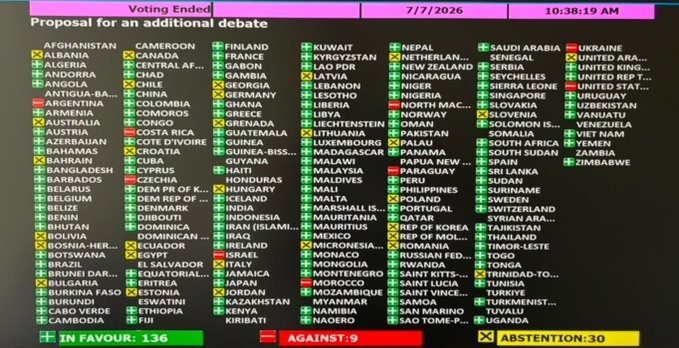
What the Resolution Actually Is
Every year the ICC submits a report to the UN General Assembly covering its work for the previous period (here, roughly August 2025–July 2026). The resolution is the Assembly's formal response to that report. It is a standing, recurring item on the agenda.
It does not create new legal obligations, fund the Court, or decide individual cases. It is a political and institutional statement of support — or the absence of it — for the ICC as an independent judicial body.
The resolution was adopted on 2 November 2026 by 93 votes in favour, 13 against, and 36 abstentions. The United States, Russia, Israel, and several others voted against. Trinidad and Tobago abstained — for the first time after years of supporting (and sometimes co-sponsoring) these resolutions.
This is the court that Arthur N.R. Robinson helped revive in 1989 when he stood at the UN and pushed for a permanent international criminal court. And now we abstain.
Trinidad and Tobago Revolutionary Socialist Party
The Country That Gave the World a Court
This is not an abstraction for us. Arthur N.R. Robinson — former Prime Minister and President of Trinidad and Tobago — stood at the United Nations in 1989 and pushed for a permanent international criminal court. Trinidad and Tobago signed and ratified the Rome Statute early — the second state party after Senegal. We put judges on that bench. We co-sponsored and voted for these resolutions for two decades.
And now we abstain. Why?
Because U.S. military aircraft have transit rights through your airports. Because the government just reaffirmed its "commitment to working with the United States on regional security." When your sky is open to someone else's planes and your foreign policy keeps lining up with Washington's vetoes, that abstention isn't neutrality. That's a bent knee.
The United States has sanctioned ICC judges and the Court itself over attempts to pursue Netanyahu and others. They vote no and pressure others to do the same. Trinidad — the country that helped birth the institution — stays silent. You're not defending international justice. You're managing access.

Don't Blame One Party — That's the Point
And don't tell me this is just the UNC. One party signs the deals, the other party shouts in opposition, then they swap — and the posture stays the same. Penny Beckles shaking Kamla Persad-Bissessar's hand at the law term opening. The cordial photos. The praise when it suits. The ritual of disagreement that never touches the real alignment.
That's your democracy? A performance where the script is written elsewhere and both sides know their lines.
The Cuba Vote: Regional Solidarity When It's Convenient
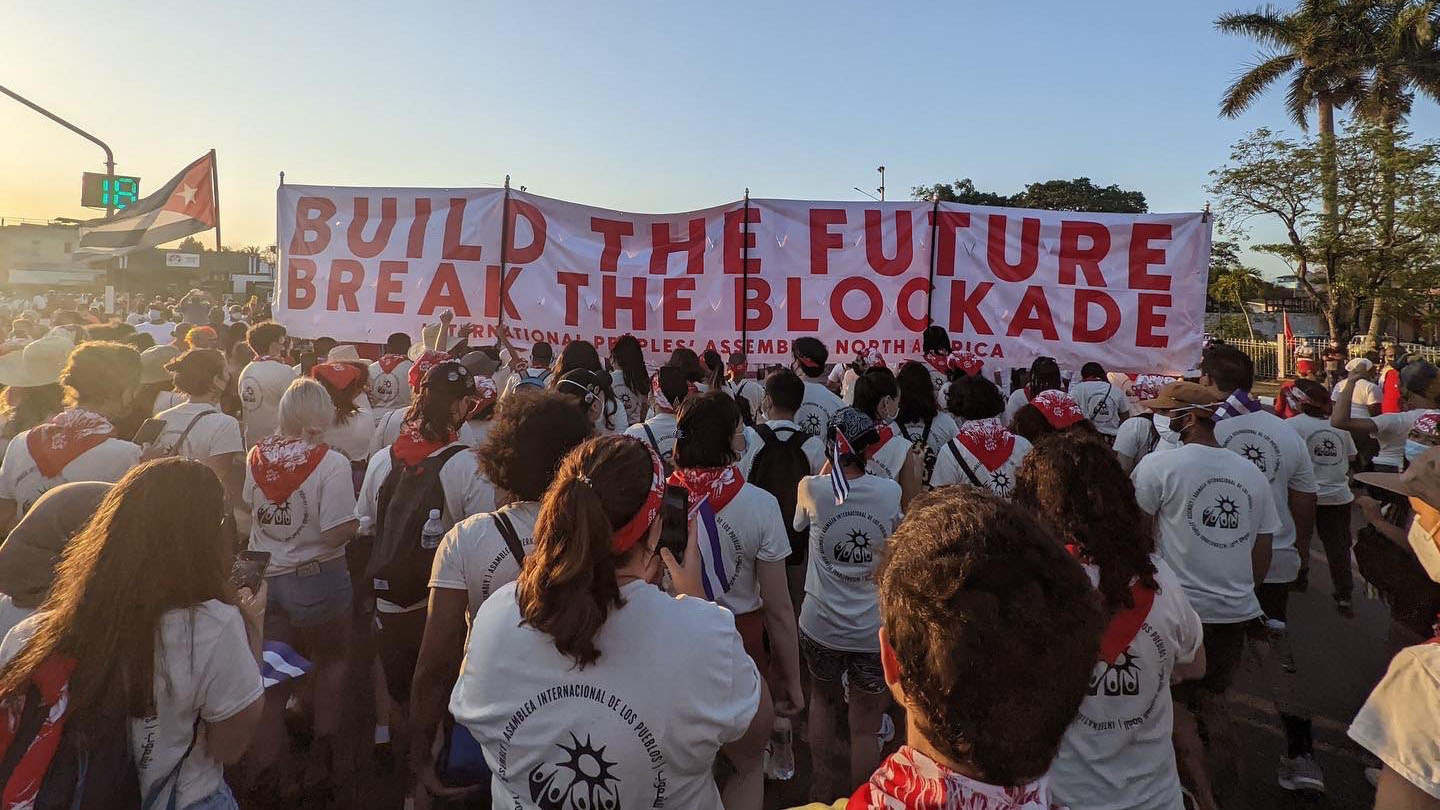
Look at the Cuba vote. Decades of opposing the embargo. This year Trinidad and Tobago voted against ending it — the only CARICOM country to do so — lining up with the U.S. while the rest of the region mostly held or shifted differently. For the pattern in full, read our earlier report on Trinidad's Cuba vote at the UN — from abstaining on the blockade to this.
Regional solidarity when it's convenient. When Washington wants a vote, the flag comes second.
What the World Sees
Look at France when people there decide the streets matter. Look at us. We get a statement from the Ministry of Foreign and Caricom Affairs, a radio interview from the opposition, and then everyone goes back to the same arrangements.
The world sees a small state that helped create one of the major international courts and then steps aside the moment the pressure arrives. They're not laughing because we're small. They're laughing because we keep performing independence while the transit permissions, the radar, the security commitments, and the abstentions tell a different story.
You're not celebrating independence. You're celebrating the performance of it. The speeches. The flags. The handshakes between PNM and UNC that change nothing about who actually sets the outer limits of what Port of Spain will say in New York. We made this argument once before, when we said cancel the celebrations — the ICC abstention is the proof of it, in an official vote record.
The next time someone asks if Trinidad and Tobago is independent, don't recite the date. Ask them about the ICC vote. Ask them about the aircraft. Ask them who writes the foreign policy when the cameras are off.
Trinidad and Tobago Revolutionary Socialist Party
The Answer Isn't in the Parade. It's in the Abstention.
Sovereignty is not a ceremony. It is what you do when the vote is recorded and the empire is watching. By that measure — the only measure that counts — Trinidad and Tobago just told the world exactly how much its independence weighs: less than a transit permission.
The TTRSP position is unchanged and unembarrassed: vote yes. Co-sponsor again. Put Robinson's country back on the right side of the court Robinson built. If the price of standing up is the loss of someone else's aircraft in our sky, then let the sky be ours and empty of them. That is what the flag was supposed to mean.