




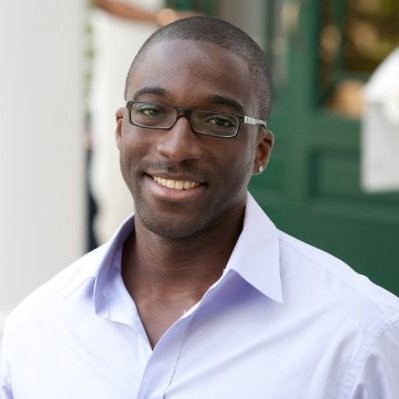
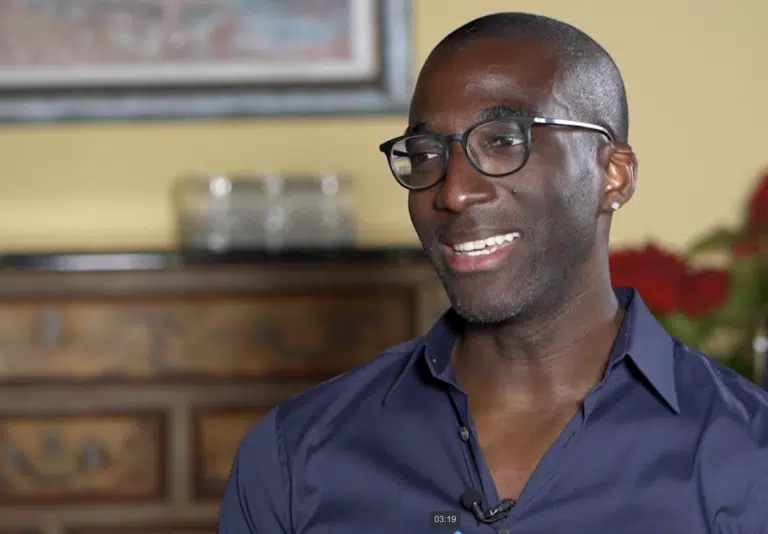
How does a man who sells rum end up running a data centre? That is not a joke or a cheap shot. It is the single most important unanswered question hanging over the multi-billion-dollar AI deal our government just signed. Because the company at the centre of it — Hummingbird AI Holdings LLC — is, according to the specialist industry press, led by Marc-Kwesi Farrell: a brilliant Trinidad-born entrepreneur whose life's work, until roughly five minutes ago, was craft Caribbean rum. So let us do what nobody in the government has done. Let us actually look at the man.
Nobody is questioning that Marc-Kwesi Farrell is talented. We are questioning how a rum-and-retail CV becomes the face of a half-gigawatt AI power project — and who put him there.
Trinidad and Tobago Revolutionary Socialist Party
The Genuinely Impressive Résumé

Give the man his due, because he has earned every line of it. Marc-Kwesi Farrell is a proud Trinidadian and, by any measure, a formidable talent:
| Age 16 | Enters MIT to study chemical engineering |
| Then | Master's from the University of Cambridge; MBA from Harvard Business School |
| Early career | Bain & Co. and Fidelity (private equity); reportedly a Caribbean media company and a sports social-media app |
| Starbucks | Recruited after meeting Howard Schultz; becomes the youngest Vice President in Starbucks history — e-commerce, US retail, beverage innovation |
| 2019 | Founds Ten To One Rum, a pan-Caribbean spirits brand (co-owned by Grammy artist Ciara) |
| 2022 | Appointed independent non-executive director of Massy Group, T&T's largest conglomerate; also boards of Wheels Up (NYSE) and an Amazon advisory council |
| 2026 | Reported to lead Hummingbird AI Holdings LLC — a proposed 150→500 MW Trinidad AI data centre |
Read that and you understand why the government could wave his name like a flag. He is exactly the diaspora success story a "bring AI home to Trinidad" press release wants attached to it: a son of the soil, Ivy-League-polished, Starbucks-pedigreed, sitting on the Massy board. On paper, a dream ambassador. But look closer at the actual through-line of that career, because it is the whole point.
The One Thing Missing From Every Line
Coffee. Consulting. Private equity. Rum. Media. A sports app. A conglomerate board seat. It is a glittering career — and there is not one data centre in it. Not one megawatt of power generation. Not one gigawatt-scale construction project. Not one line of artificial-intelligence hardware, cooling engineering, or grid infrastructure. Nothing. The man reported to be building a half-gigawatt AI facility on our soil has, in a public career spanning two decades, never built, run, financed or operated anything remotely like it.
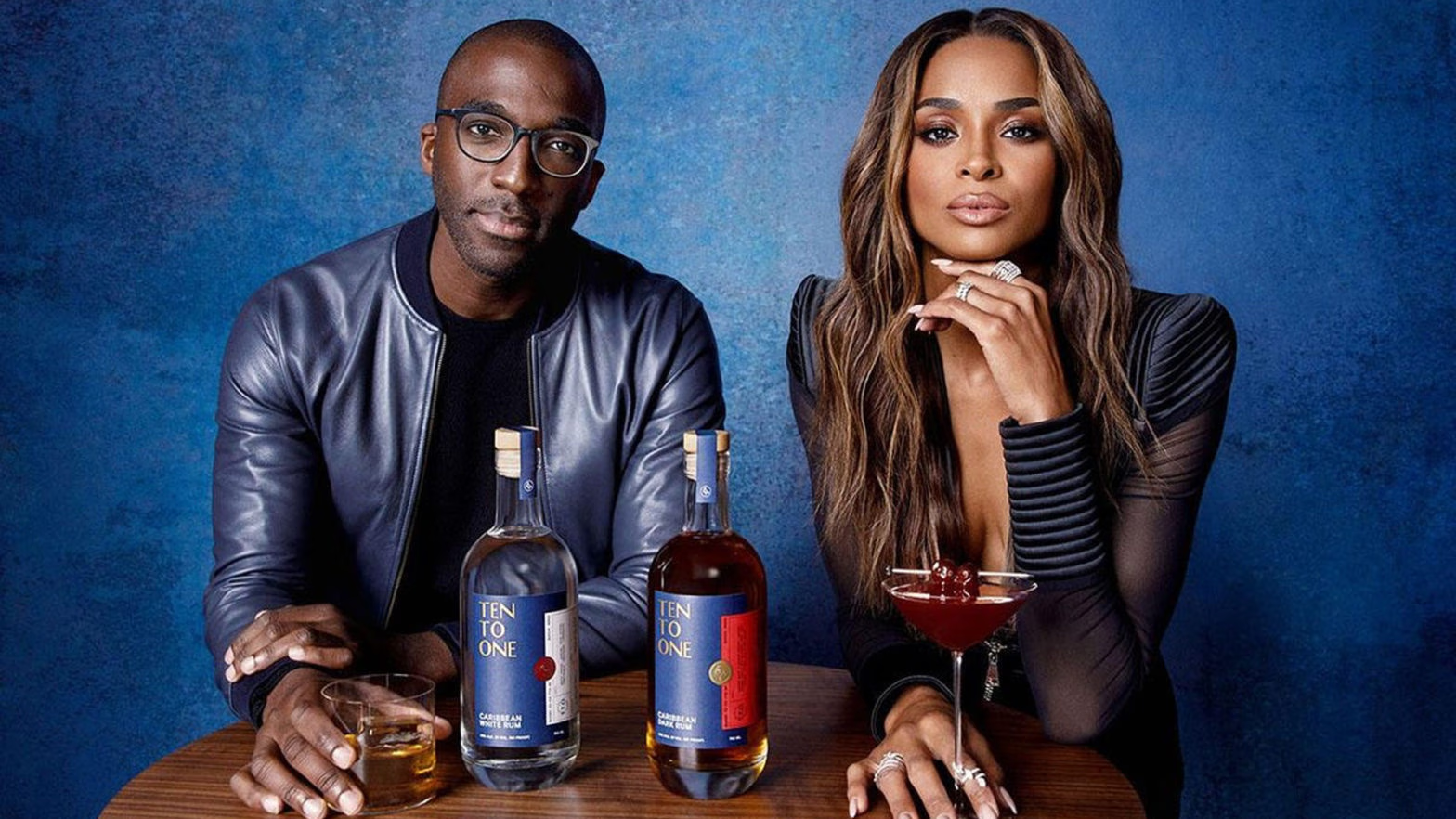
And now the number that should stop you cold. Farrell's flagship company, Ten To One Rum, has raised — across five rounds, from Cleveland Avenue, InvestBev, Rosecliff and others — a total of roughly US$8 million. That is the documented financial scale of the man's business universe: eight million dollars to build a rum brand. The Hummingbird data centre, at real construction costs, is a US$2 to 10 billion undertaking. That is not a step up. It is a leap of two hundred to a thousand times anything he has ever raised or run. Ask yourself honestly whether a person goes from an $8 million rum brand to a $10 billion AI power plant on their own steam — or whether someone, somewhere, is supplying the billions and simply using the likeable local name on the door.

The Company Nobody Can Find
Then there is Hummingbird AI Holdings itself. As we documented in our investigation into the company, it is — beyond the government's press release and the wire stories repeating it — a ghost. No corporate website. No portfolio of completed data centres. No disclosed capital, no named investors, no verifiable operating history. A "Holdings LLC" is a legal wrapper that can sit above assets and keep its true owners private. So stack the two facts on top of each other: a company with no track record, fronted by a man with no track record in this field, being handed billions in national gas, land and water. That is not a company. On the public record, it is a name and a nameplate. Whether there is a real, capitalised, competent operator behind that nameplate is precisely what the government refuses to show us.
A rum brand raised eight million. The data centre needs ten billion. Farrell did not close that gap by himself — so who did, and what do they want in return?
Trinidad and Tobago Revolutionary Socialist Party
So Where Do the Orders Come From?
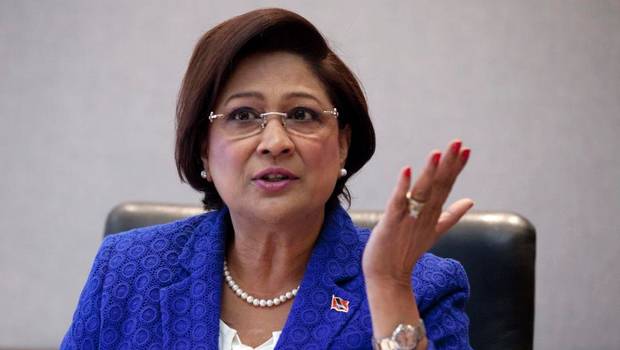
This is the question you really asked, and it deserves a straight answer built only on what is documented. We searched hard for a political link between Farrell and the UNC — an advisory post, a donor trail, a diaspora appointment, a photograph. There is none on the public record. His only verifiable Trinidad institutional tie is corporate: the Massy board. So the introduction to this government did not obviously come from Port of Spain politics.
It came from Washington. The government's own announcement thanks the Government of the United States for "facilitating" the parties, and the US Chargé d'Affaires, Philip Kern, stood at the signing beside the Prime Minister, with Foreign Minister Sean Sobers signing on our behalf. Read that plainly: the deal was not chased and won by Trinidad. It was arranged — brokered through the US Embassy and handed to our government to sign. So when you ask "where is a rum man getting his orders," the honest, evidence-based answer is: the chain of introduction runs through Washington, not through a Trini mandate. The billions behind the nameplate, and the hand steering it, are — on every available fact — foreign.
A Detour Into the Deep End: The GATE Conspiracy
Here is where we take a deliberate step off the documented path and into folklore — clearly labelled, so nobody confuses it with the evidence above. Because the moment you say the words "child prodigy — MIT at sixteen," a certain kind of Trini leans in and asks the question the internet has been asking for years: how are the gifted ones actually found, and who comes looking for them?
In the United States there is a real public-school programme called GATE — Gifted and Talented Education — and around it has grown one of the most persistent conspiracy theories on the internet. Adults who were pulled out of normal class as children describe strange things: being sorted into mysterious colour classifications, sitting audio tests with odd non-verbal patterns buried under sounds of crashing waves and wind, being profiled, watched, and told they were "different." The theory ties it to real, declassified history — the CIA's documented MK-Ultra mind-control experiments, and the Agency's 1983 "Gateway Process" report on altering human perception (note how close Gateway sits to GATE). The claim: these programmes were never really about enrichment. They were about identifying high-potential children early, profiling them, and quietly grooming a compliant, high-functioning class — future technocrats and assets who would rise, and then serve interests above them.
Now the honesty this demands, in bold, so there is no doubt: this is a conspiracy theory, and Marc-Kwesi Farrell has nothing to do with it. He grew up in Trinidad, not an American public school — he was never in any GATE programme, and we are not claiming he was. Educators have a boring, probably-correct explanation for the whole phenomenon: gifted testing is just IQ, creativity and personality assessment, genuinely strange through a child's eyes and wildly embellished on TikTok years later. There is no evidence any school GATE class was a CIA front.
So why raise it at all? Because the theory survives on one instinct that is not crazy, and it is the same instinct driving this whole article: exceptional talent does not rise in a vacuum — someone always spots it, funds it, opens the doors, and eventually asks for something back. Strip away the crashing-waves mysticism and you are left with a plain, adult truth about how power actually works. Prodigies get cultivated. Ivy-League seats, boardroom appointments, and billion-dollar "opportunities" do not fall from the sky onto a rum founder's lap by accident. You do not need a CIA colour-code to believe that a brilliant, well-connected man was placed where he could be useful. You just need to have watched how the world runs. The conspiracy theory is fantasy; the pattern underneath it — talent spotted, groomed, and deployed by people whose names never appear — is simply Tuesday.
Forget the mind-control folklore. The sober version is scarier because it's real: gifted people get cultivated by patrons they don't choose, and one day the favour gets called in. The only question worth asking is who is calling it in here.
Trinidad and Tobago Revolutionary Socialist Party
Why the Local Face Matters
Understand why a Marc-Kwesi Farrell is so valuable to a deal like this, and you understand the whole play. If Washington and an unnamed pool of capital want to plant a foreign-owned, foreign-controlled AI installation on Trinbagonian soil — burning our gas, drinking our water, sending its profits abroad — the last thing they want is for it to look foreign. So you put a beloved, brilliant, Trinidad-born entrepreneur on the letterhead. Suddenly it is not digital colonialism; it is a "son of the soil bringing AI home." The rum founder is not the problem. He may well be a sincere, capable participant. But a sympathetic local face is exactly how an extraction deal gets sold as a homecoming — and we have watched that trick work in this country for sixty years.
The Questions Marc-Kwesi Farrell Should Answer
None of this is an accusation against the man's character. It is a demand for daylight. If Farrell is genuinely leading this, he can end every doubt in one interview:
1. Who actually funds Hummingbird AI Holdings? Name the capital behind the billions.
2. What is your data-centre and power-infrastructure track record — what have you built before?
3. Who introduced you to the Trinidad government, and what role did the US Embassy play?
4. Who really owns and controls the company — and will Trinbagonians hold any equity at all?
5. Will you publish the full MOU and the ownership structure for public scrutiny?
A man with nothing to hide answers those in an afternoon. Until he does, the picture stands as the facts leave it: a rum founder with no infrastructure record, fronting a company with no footprint, in a deal introduced by Washington, to build a half-gigawatt on our land with money nobody will name. We like Marc-Kwesi Farrell. We are proud of Marc-Kwesi Farrell. That is exactly why we will not let his good name be used as the friendly mask on a deal the people of Trinidad and Tobago are not allowed to see. Name the owners. Show the money. Or the answer to "how does a rum man end up running a data centre" is the one we already fear.