



.jpg)
Try it yourself. Open a search engine and type in "Hummingbird AI Holdings LLC." This is the company the Government of Trinidad and Tobago has just signed a Memorandum of Understanding with to build a 150-megawatt AI data centre, expandable to 500 MW — a facility that, at real-world construction costs, is a multi-billion-dollar undertaking. Now look at what your search returns. A handful of identical wire-service articles repeating the government's own press release. And then… nothing. No corporate website. No headquarters you can visit. No portfolio of data centres they have built before. No named investors. No verifiable track record of any kind.
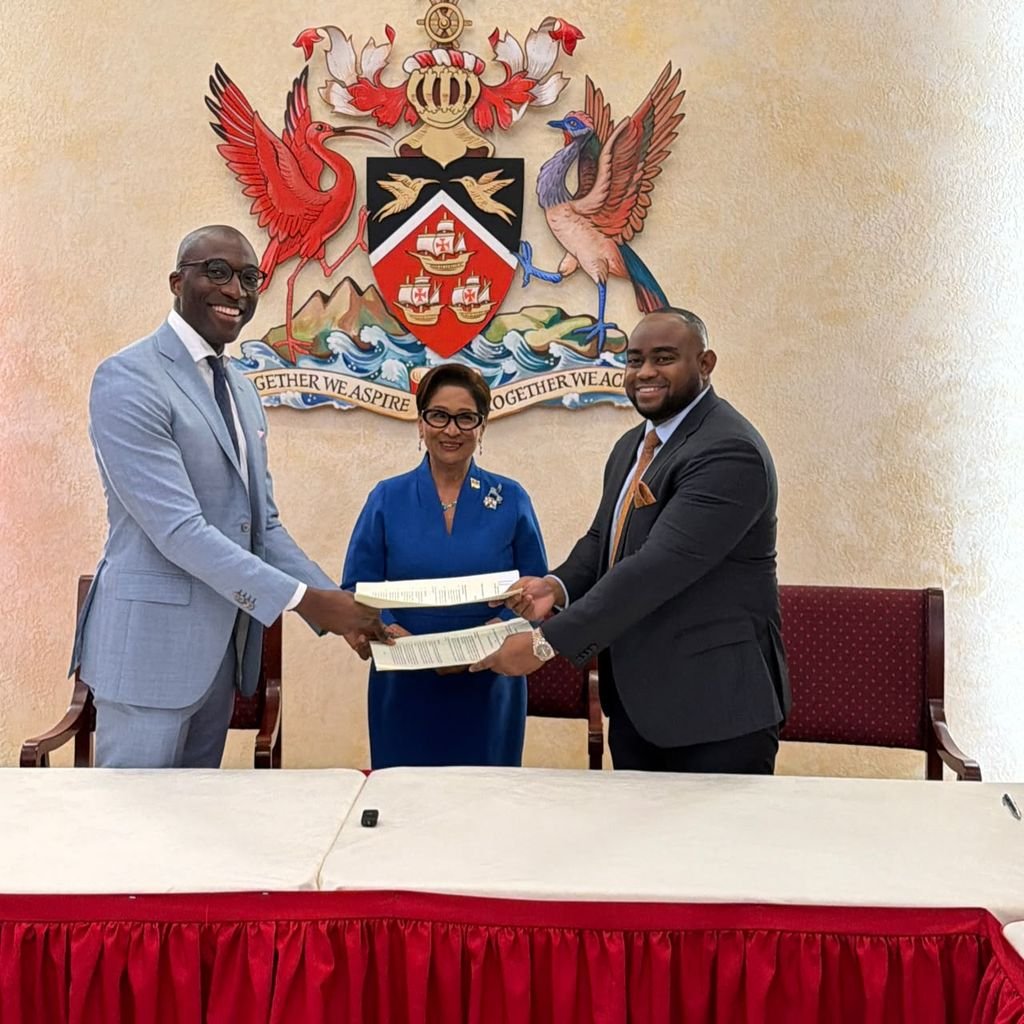
We are being asked to enter one of the largest infrastructure commitments in this nation's history with an entity that, as far as the public record is concerned, barely exists. And this is a country that has seen this exact movie before — we even know the name of the last screening. It was called LifeSport.
You do not sign a billion-dollar contract with a company you cannot find. Unless the point was never to find them.
Trinidad and Tobago Revolutionary Socialist Party
What We Could Actually Verify About Hummingbird AI Holdings
We went looking — properly. Here is the complete list of what can be independently confirmed about this company:
• It is described in the government's release as "US-based" / Florida-headquartered."
• It signed an MOU for a 150 MW facility, expandable to 500 MW, targeting Q1 2028, sited at Debe.
• That is the end of the list.
That is everything. There is no public disclosure of who owns it, who funds it, where its money comes from, what it has ever built, or who its principals are. Searches for a matching Florida corporate registration return unrelated companies with similar names — a facial-recognition startup, a fintech firm, a venture-capital fund — none of which is this entity. A holding company ("Holdings LLC") is a legal wrapper designed to sit above assets and, very often, to keep the identity of the real owners private. That is not automatically sinister. But when a government proposes to route billions of dollars and hundreds of megawatts of subsidised national gas through such a wrapper, the citizens are entitled to know exactly whose hand is on the other end. Right now, we are not permitted to know. That should chill you.
.webp)
The One Name We Do Have: A Rum Executive?
There is exactly one human name attached to this deal. The Government's own announcement lists Hummingbird AI Holdings' managing member as Marc-Kwesi Farrell. If this is the Trinidad-born entrepreneur of that name — and the Government has offered nothing to suggest it is anyone else — then his résumé is, on its face, genuinely dazzling: chemical engineering at MIT at the age of 16, a master's from Cambridge, an MBA from Harvard, stints at Bain & Co. and Fidelity, the youngest Vice President in Starbucks' history, and founder of the pan-Caribbean spirits brand Ten To One Rum. He has sat since 2022 as an independent, non-executive director of Massy Group — the largest conglomerate in the country — and on the boards of Wheels Up and an Amazon advisory council. A brilliant Trini, and a real establishment figure. We say that without a drop of sarcasm.
Now read that list again, hunting for the one thing that actually matters here. Coffee. Consulting. Private equity. Rum. Nowhere in that distinguished career is there a single data centre, a single megawatt of power infrastructure, a single gigawatt-scale construction project, or any track record in artificial-intelligence hardware whatsoever. The man reportedly fronting a 150-to-500 MW, multi-billion-dollar AI build has, publicly, never built anything remotely like it. That is not an insult. It is the entire problem in a single sentence.
A rum founder fronting a half-gigawatt AI data centre is not a résumé — it is a red flag. You do not learn to pour billions of watts of compute by blending Caribbean dark.
Trinidad and Tobago Revolutionary Socialist Party
Let us be scrupulously fair: being named a managing member is not a crime, and talented people enter new industries all the time. But half a gigawatt of AI compute is not a craft-rum launch. It demands billions in capital, specialist engineering partners, power-utility agreements and an industrial construction machine — none of which has been disclosed. So the one name we have only sharpens the question it was meant to answer: if a rum-and-retail executive is the public face of the company, whose money is actually behind it, and which firm actually builds and runs the thing? A single well-known name on the letterhead is not the same as a disclosed, accountable owner — it can just as easily be the friendly face on a wrapper whose real backers stay in the dark. And if this is instead some other Marc-Kwesi Farrell, then the Government must say so and tell us who — because the nation is being asked to hand half a gigawatt to a name it cannot even pin down.
So How Did This Reach the Government? Follow Washington, Not a Manifesto
Here is the part that reframes the whole affair. We went looking for the political thread — some relationship between Farrell and the UNC, a diaspora appointment, a donor trail, anything tying this company to the party now in power. We found none. No advisory post, no committee seat, no contract history, no photograph. On the public record, the man possibly at the centre of this has no political relationship with this government at all. His documented T&T tie is corporate — the Massy board — not political.
So how did an untraceable Florida holding company land a national infrastructure deal? The government's own release gives the answer, if you read the thank-you note: it credits the Government of the United States with "facilitating" the parties, and the US Chargé d'Affaires, Philip Kern, stood at the signing alongside the Prime Minister. The introduction did not come up from a Trini constituency; it came down from Washington. The pathway runs US Embassy → our government → a US-registered company — with Foreign Minister Sean Sobers signing on our behalf. This is not a deal we chased and won. It is a deal that was arranged for us, and handed over.
And note the tell that ties it all together: every official statement names the companies but not a single human being behind Hummingbird. The news wires, the local reports, the government's own release — all describe "Florida-based Hummingbird AI Holdings" and stop. The only reason we can even write the name Marc-Kwesi Farrell is the MOU paperwork itself; the machine built to announce this deal to the public was careful never to say it out loud. A government that is proud of who it is doing business with tells you their name. This one printed a press release about a multi-billion-dollar partner and left the "who" blank.
Remember LifeSport: The Playbook Is On File
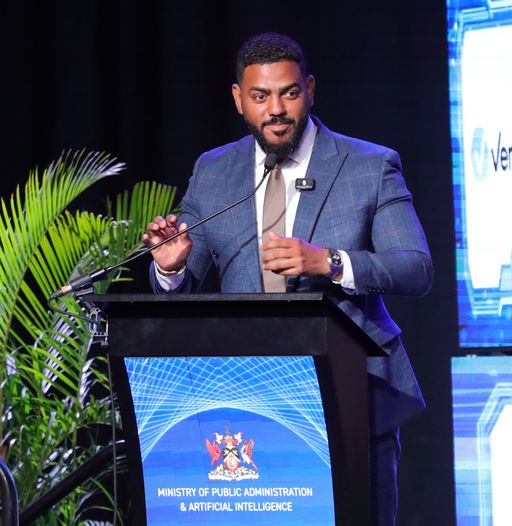
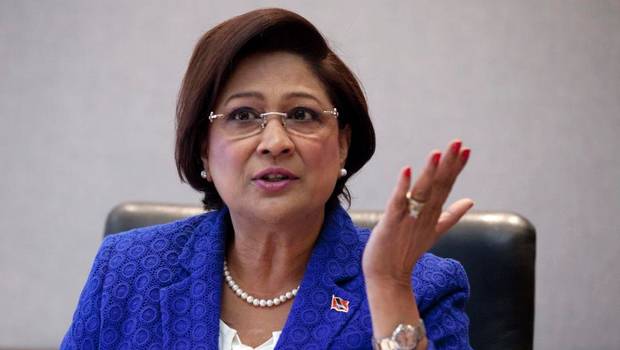
We are not being paranoid. We are being historically literate. The last time a Kamla Persad-Bissessar-led government was in office — the People's Partnership — it produced one of the most brazen state-looting operations this country has ever documented: the LifeSport programme.
The facts are a matter of public record, established by the Ministry of Finance's own Central Audit Committee:
• An estimated $440 million was bled from a youth sport programme.
• Investigators linked 59 companies to 104 individuals — and a notarised statement alleged that phantom companies were specifically set up to siphon the money.
• The audit described "ghost centres, ghost participants," improper procurement, padded invoices and "major theft of state funds."
• A single $34 million payment went to one man for numeracy work that was never delivered.
• The sport minister resigned. And more than a decade later — after a British investigator's team was reportedly close to completing its work — the probe was shelved, and not one person has been held accountable.
That is the template. Not a rumour — an audited, documented method: create companies that exist mainly on paper, route public money through them, deliver little or nothing, and count on the investigation dying of old age. When the same political movement returns to power and immediately proposes to move billions through a company nobody can identify, the burden is not on us to prove wrongdoing. The burden is on them to prove this is not LifeSport with more zeroes.
.jpeg)
Now Do the Math: Where the Grift Would Hide
Here is why a data centre is the perfect vehicle for exactly this kind of theft — better than LifeSport ever was. Almost nobody in the country can independently price one. A youth sport programme, people could eventually see was empty. A gigawatt-scale AI facility? The technical opacity is total. So the padding hides in plain sight. Let us anchor it in real numbers.
Global 2026 benchmarks for building data centres are well established: roughly US$8–12 million per megawatt for a standard facility, and US$15–20 million+ per megawatt for the high-density, AI-optimised kind these MOUs describe. Apply that honestly to what is on the table:
| Facility (AI-grade build) | Capacity | Real build cost @ US$15–20M/MW |
|---|---|---|
| Hummingbird (initial) | 150 MW | ~US$2.25B – 3B |
| Hummingbird (expanded) | 500 MW | ~US$7.5B – 10B |
| Ernst & Young facility | 300 MW | ~US$4.5B – 6B |
| Combined potential | up to 800 MW | ~US$12B – 16B |
Sit with those figures, then set them beside the government's headline of "US$5 billion in potential investment" — a figure that is supposed to cover all three MOUs, the data centres and the Point Lisas steel-and-vanadium deal. The real build cost of just the AI capacity described runs to two or three times the entire announced investment. Either the projects are a fraction of what the megawatt numbers imply, or the "US$5 billion" is a soft, meaningless headline. Both possibilities are a problem, because both mean the real numbers are unfixed — and unfixed numbers are where money disappears.
Understand what that range means for grift. When a legitimate build honestly costs somewhere between US$8 million and US$20 million a megawatt depending on specification, any invoice in that band can be waved through as "market rate." On an 800 MW programme, the difference between the low end and the high end is measured in the billions. Padding of even ten percent on a build this size is over a billion dollars — and who, exactly, audits the true cost when the counterparty is an untraceable holding company and the technical detail is beyond public scrutiny? This is the LifeSport padded-invoice trick, scaled from a sport programme to a national grid asset. The mechanism is identical. Only the decimal point has moved.
LifeSport hid a few hundred million behind ghost participants. A data centre can hide a few billion behind a spec sheet no citizen can read.
Trinidad and Tobago Revolutionary Socialist Party
The Construction Boom Is the Real Prize
As we set out in our cost-benefit analysis, a finished data centre employs only a few hundred people. The genuinely enormous, genuinely local flow of money is the build — the earthworks, the concrete, the steel, the electrical fit-out, the water ponds, the desalination plants, the grid upgrades. That is a multi-billion-dollar river of public and quasi-public spending flowing through contracts and subcontracts. And that river runs directly past the same contract mafia that has fed on every large project in this country's modern history. A foreign "anchor" whose ownership cannot be traced is the ideal front for that river to flow behind.
The Questions That Must Be Answered Before a Cent Moves
We are not saying a crime has been committed. We are saying that every single guardrail that would prevent one is currently missing, and that the government now leading us has a documented history of removing exactly these guardrails. So, publicly and on the record:
1. Who owns Hummingbird AI Holdings LLC? Name every beneficial owner — the real human beings, not the wrapper. Disclose any that are Trinbagonian, politically connected, or linked to party financiers.
2. What has it ever built? Show one data centre this company or its principals have delivered anywhere on earth.
3. Where is the money coming from? A US$2–10 billion build requires capital. Whose capital? Show the balance sheet or the backers.
4. Publish the full contract and the costing. Not an MOU, not a press release — the itemised cost per megawatt, independently benchmarked, open to public and parliamentary audit.
5. Independent procurement oversight, in advance. Not a shelved investigation five years too late. A live, independent watchdog on every contract before it is signed.
Until those five questions are answered in full, no reasonable citizen should accept a single dollar of commitment to this deal.
We Want the Data Centre. We Refuse the Con.
Let no one twist this. We have argued harder than anyone in this country for a data centre — a sovereign, publicly owned one, built with our gas for our people. That is precisely why this version enrages us. A deal structured this way — an untraceable foreign holding company, a subsidised national resource, a multi-billion-dollar build with no published costing, run by a government that has already shown the nation how it uses phantom companies — is not the sovereign future we fought for. It is the old theft in a new suit, and the suit says "artificial intelligence" on the lapel.
Trinbagonians paid for LifeSport and got ghosts. We will not pay for a data centre and get the same ghosts, wearing a lanyard. Name the owners. Publish the numbers. Or kill the deal.