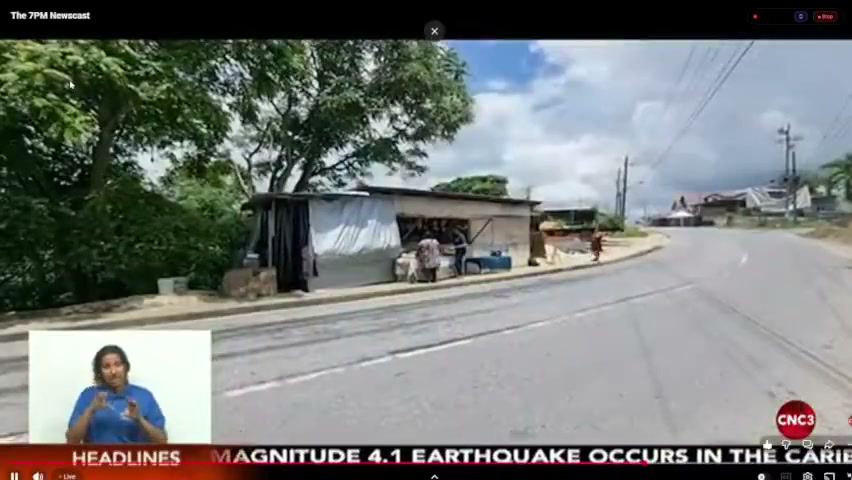
Watch the video above this sentence. It is less than three minutes long. It is the entire Republic of Trinidad and Tobago in the year 2026, filmed from the shoulder of the Naparima-Mayaro Road in Princes Town — and every single person drawing a salary from this State should be made to watch it on a loop until they understand what they are being paid to prevent.
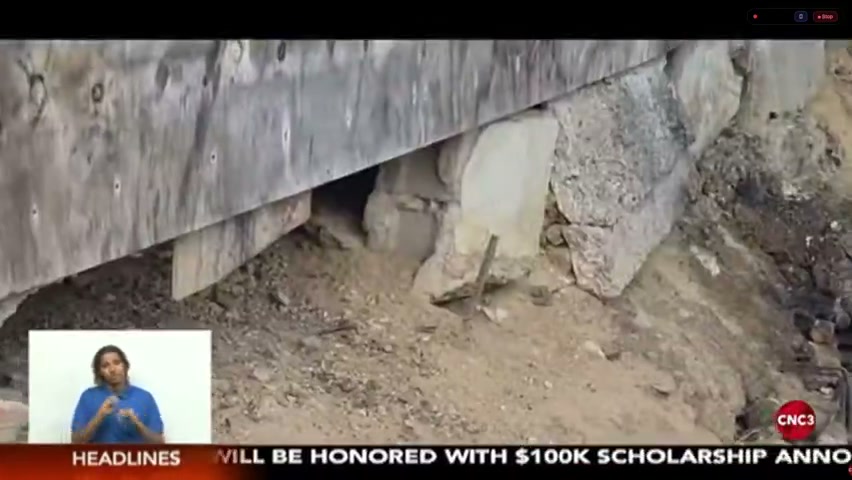
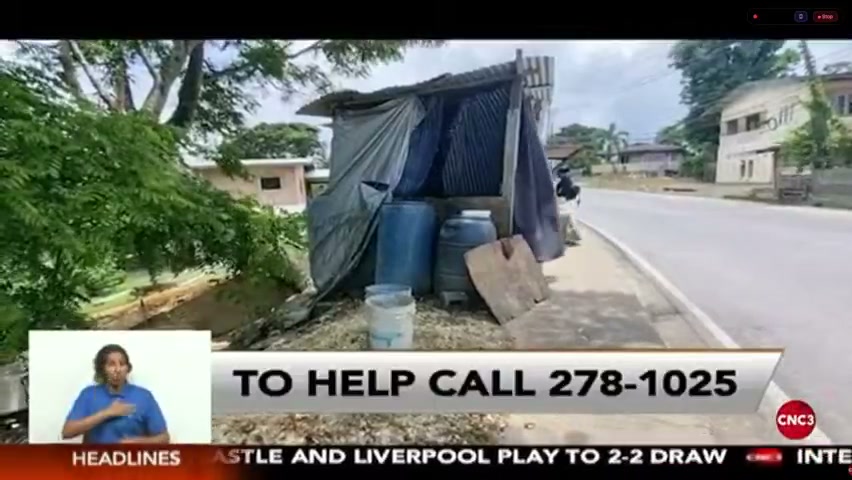
On Saturday, CNC3’s Rishi Raghunath and Sasha Wilson reported a story that should have stopped the country. It will not stop the country, because nothing does anymore, and that is precisely the indictment. A 34-year-old single mother named Sabrina Khadoo is raising twelve children inside a roadside vegetable stall. Not near a stall. Not behind a stall. In it. The stall is the house. The house is the stall.
The broadcast walks you through it, if you can bear the tour. The two eldest boys are 18 and 16. The ten daughters run from 13 down to one year old. The beds are mattresses on a concrete floor. The kitchen is one half of the single room. And the bed — listen to her say it herself — is “right underneath the table” where the vegetables are sold. A child sleeps under a produce counter on a national highway, in a country that exports liquefied natural gas to the world.
No running water. No electricity. The bathroom is at the grandmother’s house a few doors away — which means thirteen people schedule their bodies around the kindness of proximity. The plywood is rotting. The rain comes through. The state land behind the stall is eroding out from under the family, and nobody with a title, a ministry, or a payroll number has ever stood on it.
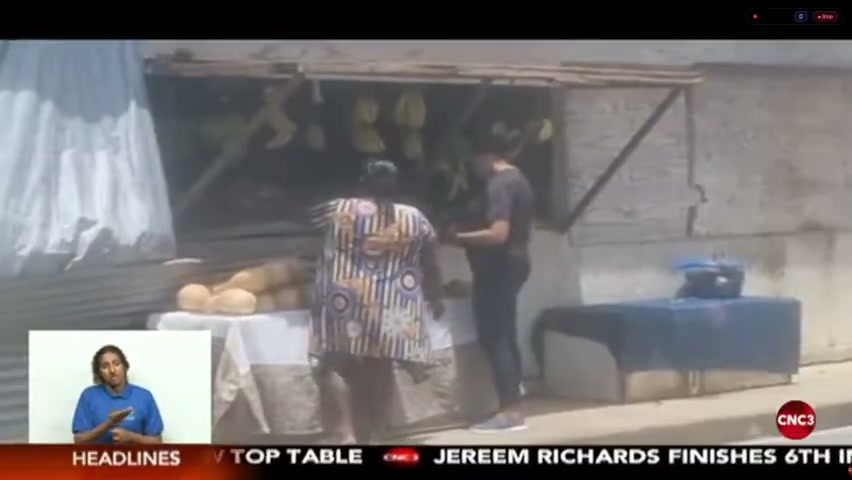
She Did Everything This Country Demands. It Wasn’t Enough.
Before anyone even thinks about reaching for the comfortable excuses — the lazy-mother myth, the welfare-queen fable, the “where the father” reflex — sit with the facts this woman handed to a television crew of her own accord.
She has worked that stall since 2014. Twelve years. She gets up, buys produce, sells produce, and pours every dollar back into the children. She receives a food card and public assistance, and it still is not enough to keep twelve children housed, fed, and transported — because the school transport alone, by her own count in the segment, runs about $900 a week. Nine hundred dollars a week, in a country that brags about free education, to get eight children to the classroom door. Two of her daughters, ages three and four, are not in school at all — because there is no money for it. Free education, behind a paywall the poor cannot clear.
“My girls are A-class because I can show you the report book. They score, like, 98 percent, 97 percent.… They never really miss school.”
There it is. The report books she keeps like deeds. 97, 98 percent — marks children in Port of Spain penthouses do not always bring home — earned at a table beside a highway, by lamplight if there is lamp oil, by children whose bedrooms are mattresses under a vegetable counter. This is not a family failing to pull its weight. This is a family carrying more than its weight up a hill the State greased.
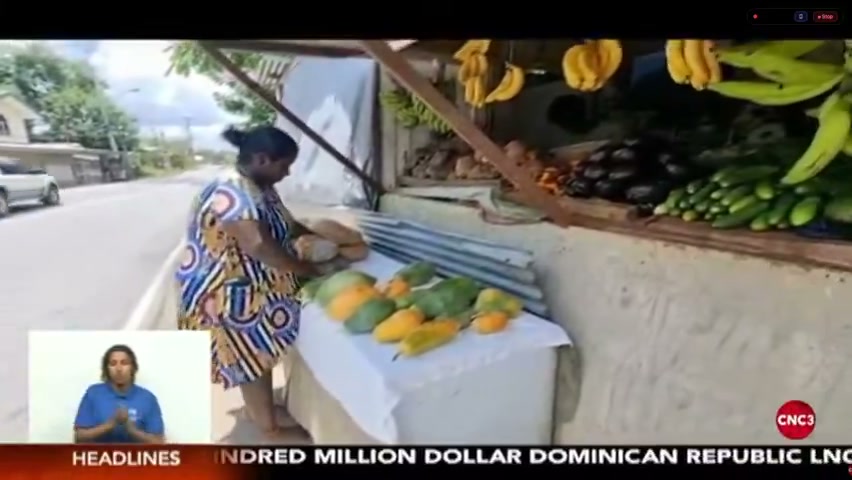
“It’s like a day-to-day basis, day-to-day, you live day-by-day, by what you make, you pay back.” That is not a life strategy. That is a treadmill. And this country has the audacity to conduct poverty audits on a woman like this while ministers audit nothing but their own travel allowances.
Four Years of Silence From the Land Settlement Agency
Here is the part of the story that should end careers.
Sabrina Khadoo applied to the Land Settlement Agency for a starter home in 2022 — four years ago, before her partner was murdered, before the plywood started giving out. She is still waiting for an answer. Not a house. An answer. The State could not even manage a rejection letter in four years; it simply filed a mother of twelve under “pending” and moved on to ribbon-cuttings.
Ask yourself how many thousands of Sabrina Khadoos are sitting in that same silence, on that same list, in St. Augustine filing cabinets, while the housing ministry commissions studies, launches units of measurement, and holds town halls about intention. A bureaucracy that loses a mother of twelve for four years is not broken. It is functioning exactly as designed. The poor are not a queue to this State. They are wallpaper.
A Murder One Year Ago, and a State That Was Never There
The segment drops it almost in passing, the way this country drops its murder statistics — the children’s father, 40-year-old Sherwin Balkaran, was killed. The youngest child was eight days old when it happened. By the broadcast’s own timeline, that killing was one year ago — to the day, as you read this.
So tally the State’s attendance record for this one woman’s life. She was fourteen years old when her relationship with a grown man began — where were the protective services then? Her partner is murdered and the homicide machine rolls on, unsolved, unexamined — where was justice then? She applies for housing in 2022 — where was the LSA then? Her daughters take 98-percent report books out of a highway stall — where is the school support division now? Every single institution this country funds to catch a family before it falls watched this family fall, one rung at a time, for two decades, and did nothing.
And then, when a camera finally shows up, the response arrives on cue: the Minister of the People, Social Development and Family Services, Vandana Mohit, says she “will look into the matter.” Look into it. A ministry whose literal middle name is Family Services, discovering a family of thirteen from a television broadcast, sixty miles from its air-conditioned headquarters. She will look into it — the same way governments have looked into flooding, looked into healthcare, looked into the ferry, looked into crime. Looked into, and looked away.
The Money Is There. The Will Is Not.
Do not accept a single syllable about austerity in response to this story. This is not Haiti. This is not a country begging at the IMF’s door. This is a petrostate that flows LNG to four continents, that has spent the last year writing love letters to data-centre billionaires ( our warnings are on record ), that found the public purse flexible enough for billion-dollar memorandums with ghost companies and cost-benefit theatre — but cannot find plywood, pipe, and current for a family of thirteen on the Naparima-Mayaro Road.
Every consortium that got a fact-finding tour of this country received more institutional attention than Sabrina Khadoo received in twelve years at her stall. Foreign capital gets memoranda of understanding. A Trinidadian mother of twelve gets a phone-in number at the end of a news segment. That is the social contract of this government, printed in its true colours: risk capital first, citizens somewhere after infrastructure, if the tide is high enough.
What She Is Asking For Is Almost Nothing
Listen to the size of her request, because it should shame every budget line in this country. She is not asking for a mansion. She is asking someone to help extend the stall by one room, give her girls a bathroom, and show her how to get water and electricity connected — “because I don’t know the process on getting it.” She said that out loud, to a nation, with no shame, because there is no shame left to feel when your children are sleeping under a vegetable table.
“If anybody can help, assist with lights and water and how to get in it — because I don’t know the process on getting it.”
A functioning state would have already dispatched a housing officer, a utilities crew, and a school-support team. A functioning state would not need a news crew to find her. A functioning state would treat a 2022 application from a mother of twelve as a five-alarm file, not as wallpaper.
CNC3 published the family’s contact so ordinary people can do what the State will not.
Call 278-1025. This week. Before the news cycle moves on and this country goes back to pretending.
The Demands, In Writing
The Trinidad and Tobago Revolutionary Socialist Party puts these on the record, and we intend to keep them there:
One. Emergency housing assistance for the Khadoo family — immediately, not after the next budget cycle.
Two. A public audit of the Land Settlement Agency’s application backlog — every file older than one year, named, counted, and answered.
Three. School transport relief for every family paying out of pocket to access “free” education — because $900 a week is a tax on the poor, collected in cash.
Four. A utilities connection program for informal dwellings, so that no child in this country does homework by highway lamplight.
Housing is not a favour. Water is not a perk. Electricity is not a dream. They are the minimum entry price of a society that wishes to keep calling itself one — and a country that can fund everything except its people should stop being surprised when its people stop believing in it.
Watch the segment again. Look at the report books. Look at the mattresses. Look at the woman who said, without a trace of self-pity, “I am really doing the best I can do as a mother for my children” — and then look at the minister who answered the same broadcast with four words worth of nothing.
The best mother in this story is the one living in a stall. The failures are the ones living on our money.
Opinion and fair comment on the CNC3 segment by Rishi Raghunath and Sasha Wilson broadcast 23 August 2026 ( “Mother of 12, living in roadside stall, appeals for help”) and the party’s post of 24 August 2026. All quotations are verbatim from the broadcast or the reporter’s script. The video above is embedded for commentary and is the property of CNC3 / Guardian Media. Characterisations of institutional failure are the author’s argument. The family’s assistance number, 278-1025, is published by CNC3 with the family’s consent.
Support Our Socialist Movement.
Solana: 6b3Xx9hQoEvF1PNQ8seWVRH8w4xHHRECZWQCSsWDcGnp
ETH: 0x583D4f1E9be39ea78C00Ee84de0728cd85129346