While You Were Fighting Over a Data Center
Watch this. Then ask yourself why nobody in Trinidad and Tobago is talking about it. Automated license plate readers — Flock-style surveillance cameras that log the movement of every vehicle that passes them — are being rolled into this country. Quietly. Without a single town hall. Without a vote. Without your consent.
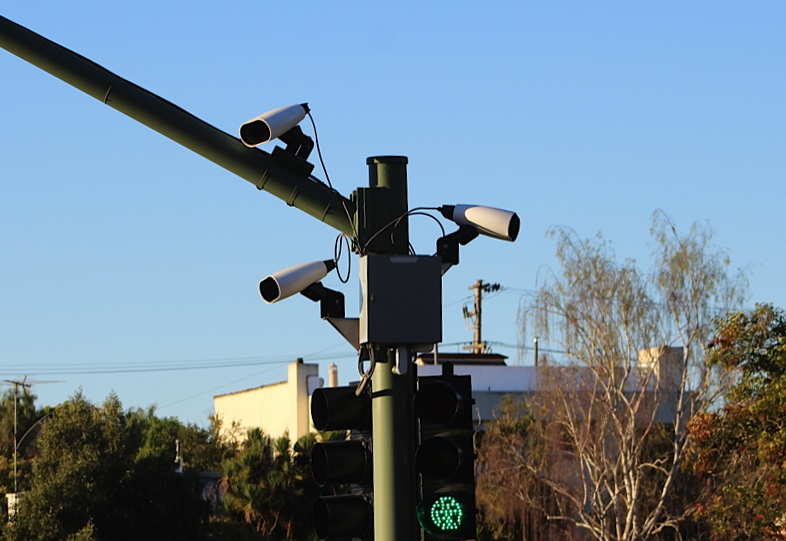
This is how it always happens. Not with a bang, not with a debate, but with a press release nobody reads and a procurement line nobody questions. By the time the average Trini realises the cameras are already up on the poles, the network is built, the contract is signed, and the data is flowing to a database you will never be allowed to see.
What an ALPR Network Actually Does
Understand what this technology is before you shrug it off. An Automatic License Plate Reader does not just take a photo. It reads your plate, timestamps it, tags the location, and stores it — every car, every time, whether or not you are suspected of anything. Bolt a few hundred of these across the highways, the roundabouts, the community entrances, and you have built a machine that can reconstruct where any citizen has been, who they visit, what church or mosque or political meeting they attend, and how long they stayed.

Companies like Flock Safety sell this as "solving crime." What they are actually selling is a permanent, searchable record of an entire population's movements — sold back to the same state that cannot keep the water running, cannot solve the murders it already has evidence for, and cannot be trusted with the powers it already holds. You do not fix a broken, unaccountable police service by handing it a dragnet. You just make the abuse faster.
A surveillance system is not judged by how the people who install it promise to use it. It is judged by what the worst government you will ever elect can do with it once it already exists.
The Outrage Is Aimed at the Wrong Target
Here is what makes it obscene. The whole country found its voice over a data center — a project that, by every serious account, will not and likely cannot be built the way it was sold. We have written about that circus more than once: the data center pitch itself, the cost-benefit numbers that never add up, and the Debe / Point Lisas siting nonsense. Column inches, talk-show segments, protest energy — all spent on a building that may never pour its foundation.

Meanwhile the surveillance grid goes up in silence. Think about how convenient that is. A loud, speculative controversy soaks up all the public anger, while the thing that will actually track you — the thing that is real, funded, and being installed right now — sails through untouched. Whether that is by design or by accident, the effect is identical: the watchers get their cameras while you argue about a data center that was never going to exist.
.jpeg)
Ask the Questions They Are Hoping You Skip
Who signed off on this? Which supplier got the contract, and how much are we paying? Where is the data stored — on Trinidadian soil, or on a foreign company's servers subject to a foreign government's subpoenas? Who can query it? How long is it kept? What stops it from being pointed at journalists, at protesters, at political opponents, at your union? Where was the public consultation, and if there was none, why not?
Every one of those questions has an answer. The state simply prefers you never ask them. Surveillance is only accepted because it is introduced quietly, one "pilot programme" at a time, until it is too entrenched to remove. The moment to object is now — while the poles are still going up — not five years from now when the network is woven into every road and someone finally uses it against the wrong person.
Save some of that data-center outrage. You are going to need it for the thing that is actually watching you.
Support Our Socialist Movement.
Solana: 6b3Xx9hQoEvF1PNQ8seWVRH8w4xHHRECZWQCSsWDcGnp
ETH: 0x583D4f1E9be39ea78C00Ee84de0728cd85129346