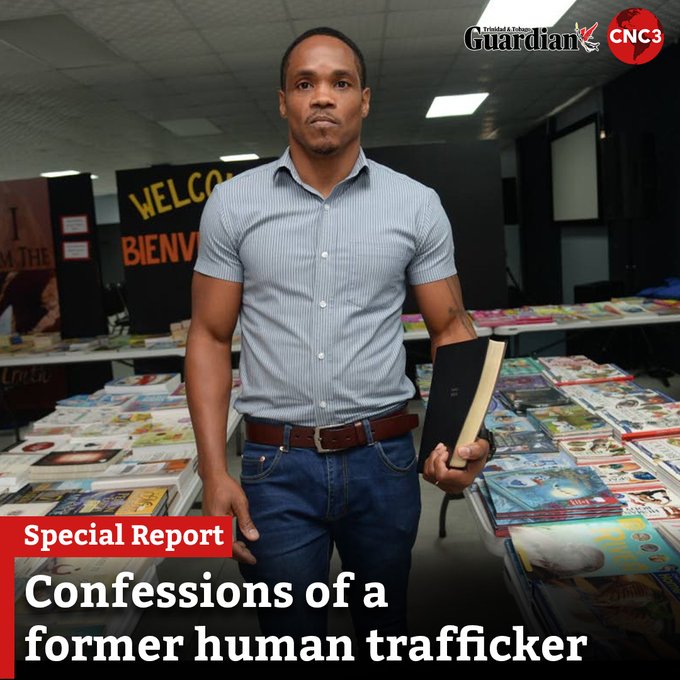
This Is Not Journalism. It Is PR for a Pimp.
What the actual hell is wrong with CNC3 and the Trinidad Guardian? On Sunday they ran a smiling, soft-focus redemption segment about Alex Philip — a man who built a full-scale human trafficking ring that funnelled girls and young women between 14 and 25 into the sex trade in south Trinidad for years. And their instinct was not to ask him a single hard question. It was to hand him a camera, some emotional music, and a Bible to hold.
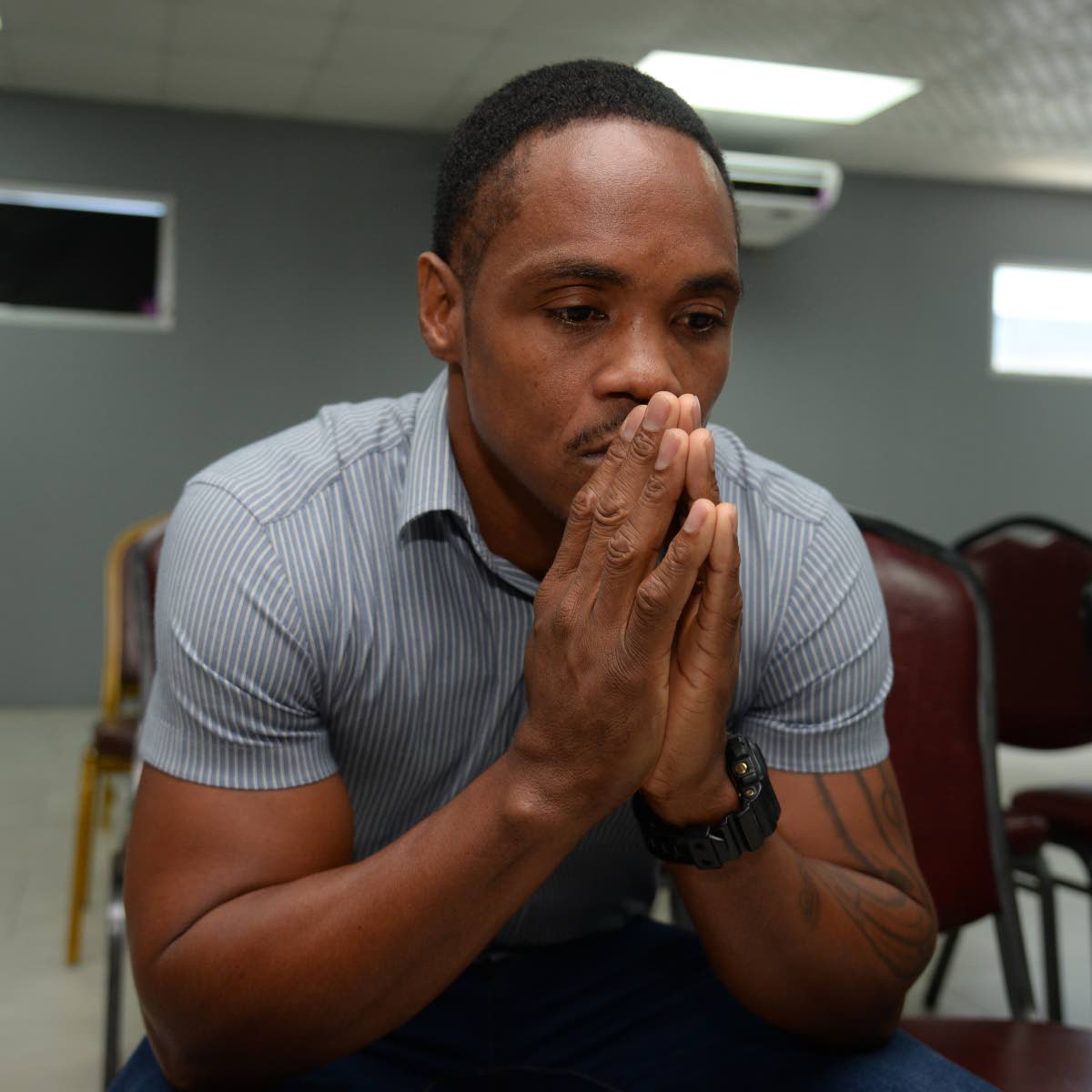
Read the package they built. A Venezuelan who came to Trinidad as a teenager. Twenty-three females every six months. Drugs on the side. Offered $1.5 million to launder money. Operating in plain sight for six years and never once arrested. Then cancer hits, the money runs out, the legs give out — and suddenly he is clutching a Bible, talking about "sins" and "a new start." Soft focus. Emotional close-ups. "Bible in hand." "Threshold of a new start." The whole sanitised package, produced for ratings.
Venezuelan-born Alex Philip, who operated a secretive and successful sex industry in south Trinidad without being caught, watched his booming business crumble when a sudden health crisis forced him to seek redemption for his sins and ill-gotten gains.
— CNC3TV (@CNC3TV) July 26, 2026
Guardian Media reporter… pic.twitter.com/rE88Skvk6i
This is not journalism. This is PR for a former pimp and trafficker of children. And Guardian Media — a private, capital-owned outlet that has never met a comfortable narrative it would not run — chose it on purpose.
Where Are the Victims in This Story?
Ask the only question that matters. Where are the girls? The 14-year-olds he and his scouts hunted, bought, and sold into brothels? The women moved across borders like cargo for profit? In CNC3's version they are reduced to background props in one man's sob story. No names. No faces. No follow-up on whether a single one of them ever saw justice, compensation, or even an apology that was not filtered through a lens for a rating point.
Finding Jesus after the fact does not undo the trafficking of minors. It does not heal the trauma. It does not put the predators behind bars. Treating it as inspirational content is a slap in the face to every survivor still living with the consequences.
He Didn't Grow a Conscience. He Ran Out of Money.
Let us be honest about the "redemption." Philip did not stop because he grew a conscience. He stopped because myeloma cancer and paralysis took his empire away. The moment the cash dried up and the wheelchair arrived, religion became the exit strategy. How convenient. How predictable. And of course the media laps it up — another "I found God" tale that lets everyone feel warm and fuzzy while the man who treated underage girls as inventory walks free, gets airtime, and starts collecting sympathy.
In Trinidad we apparently do not throw child traffickers under the jail. We put them on TV. We let them recite the numbers — "$1,500 to $5,000 per girl" — like they are bragging about a business model that just happened to collapse. We nod along while they talk about redemption without a single day in a cell, without naming co-conspirators, without ever facing the people whose lives they destroyed.
The Statute of Limitations Is Not the Barrier
And do not let anyone tell you his hands are legally tied. Alex Philip is not in prison because no one has charged or prosecuted him — despite his own detailed public admissions. The statute of limitations is almost certainly not the barrier here.
Look at what he has said in public himself. Born in 1979. Ran the operation in south Trinidad from roughly 2010 to 2016. Every six months, about 23 Venezuelan females aged 14 to 25, selected by photo for clients' "preferences" — long black hair, fair skin, specific ages. He charged clients TT$10,000–15,000 for short arrangements and up to TT$50,000 for longer ones. He dealt drugs. He was later offered money-laundering work. And — this is the part the country must not skip past — he claims the police "always took care of" him, and that many of his clients were influential.
There it is. That is why he operated for six years and never got caught. Not because he was clever — because the trafficking of poor Venezuelan girls served people with money and power, and the state that is supposed to protect children instead protected the man selling them. This is the class story the Guardian will never run: the victims were foreign, poor and female, the clients were local, rich and connected, and the machinery of the state lined up exactly where you would expect.
CNC3, You Had a Choice
This was not the only story available. You could have asked the hard questions: Why was he never investigated? Which officers "took care of" him, and are they still serving? Who were the influential clients? Where is the Counter Trafficking Unit on a man who confessed on your own network? What happens to the network he left behind? Instead you chose the easy, clickable, feel-good "former criminal finds God" package — his pastor sitting beside him for July 2026 exclusives. You chose to platform the perpetrator and erase the victims.
This is not news. It is sanitisation. It is complicity dressed up as storytelling. And it is an insult to every person who has ever been trafficked in this country. When you understand who owns the cameras and whose comfort those cameras protect, this stops looking like a bad editorial call and starts looking like exactly what corporate media is built to do.
If He Wants Redemption, He Knows Where the Station Is
If Alex Philip truly wants redemption, he can start by walking into a police station — naming every scout, every buyer, every location, every officer who "took care of" him — and accepting the full weight of the law. Redemption that costs the redeemed nothing is not redemption. It is a rebrand. Until he does that, keep his face and his "confessions" off our screens.
Trinidad deserves better than this. The victims deserved better than this. And CNC3 just proved, once again, exactly whose side the establishment press is on — and it was never ours.
Support Our Socialist Movement.
Solana: 6b3Xx9hQoEvF1PNQ8seWVRH8w4xHHRECZWQCSsWDcGnp
ETH: 0x583D4f1E9be39ea78C00Ee84de0728cd85129346