



“Haiti has mountains of iridium” is a mountain of disinformation
For years a claim has gone viral in waves: that Haiti sits on the world's second-largest iridium reserves — a secret “mountain” of the stuff worth twenty trillion US dollars, and that this hidden treasure is the real reason for foreign meddling in the country. It resurges every time Haiti is in the news, and with Haiti's crisis dominating headlines since 2024, the myth is circulating harder than ever. It is false. And the truth matters, because the REAL story of how Haiti has been looted is well documented — and it never needed a fake mountain.
Where the claim comes from: a real (and famous) geological fact
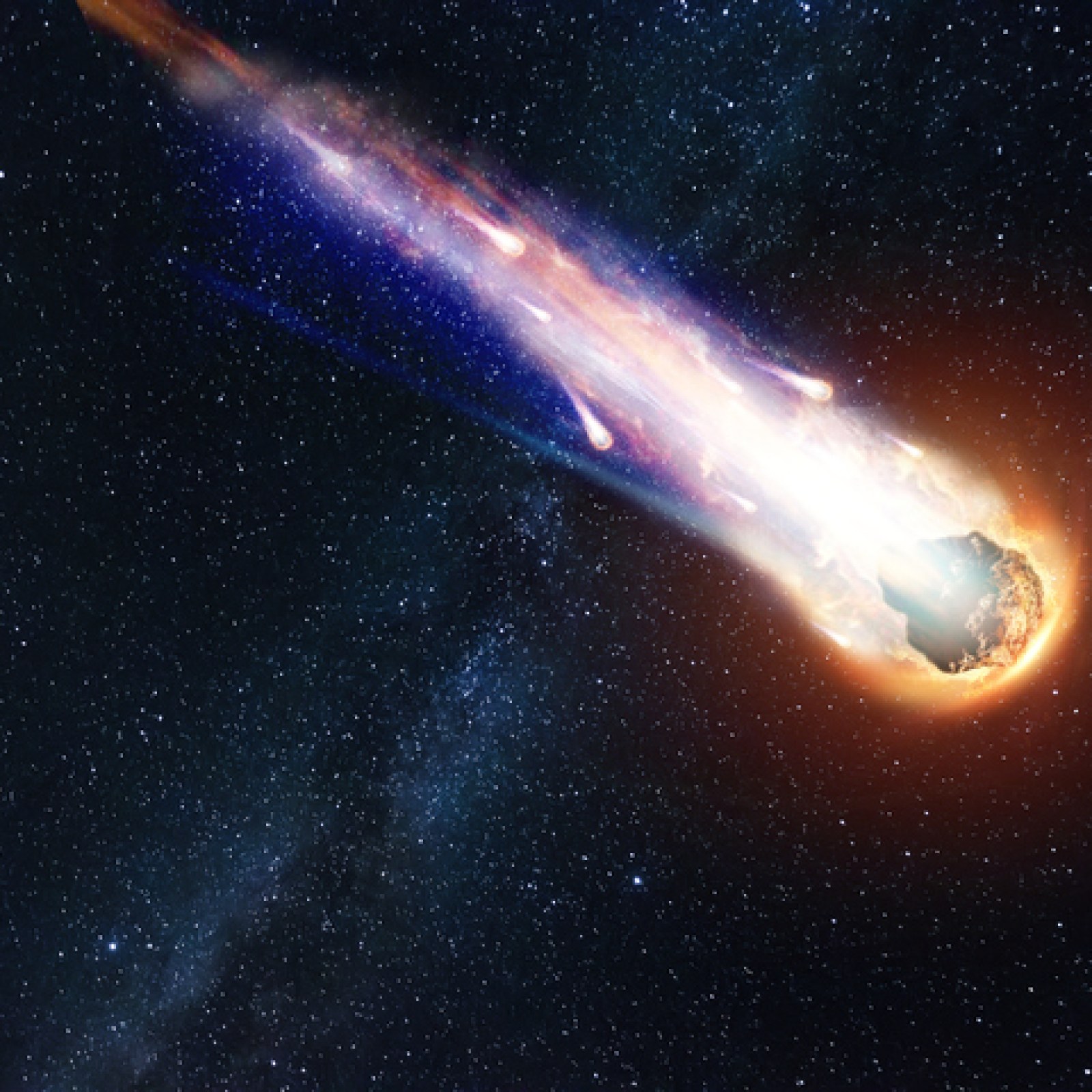
Sixty-six million years ago, an asteroid roughly 10 km wide struck the Earth at Chicxulub, on Mexico's Yucatán Peninsula — the impact that ended the dinosaurs. The asteroid did not land in Haiti. What Haiti has, in the Beloc Formation of its southern peninsula, is one of the world's best-preserved layers of ejecta from that impact: a thin band of glassy tektites and dust that rained down across the Caribbean afterwards.
Asteroids are far richer in iridium than the Earth's crust, so that thin boundary layer is measurably “enriched” in iridium. This is genuinely famous science — it is the same worldwide iridium anomaly that led the Alvarez team in 1980 to propose the asteroid-extinction theory in the first place. But “enriched” here means concentrations measured in parts per billion, inside a clay layer a few centimetres thick. That is a chemical fingerprint, not an ore body.
What iridium actually is — and why the numbers don't work
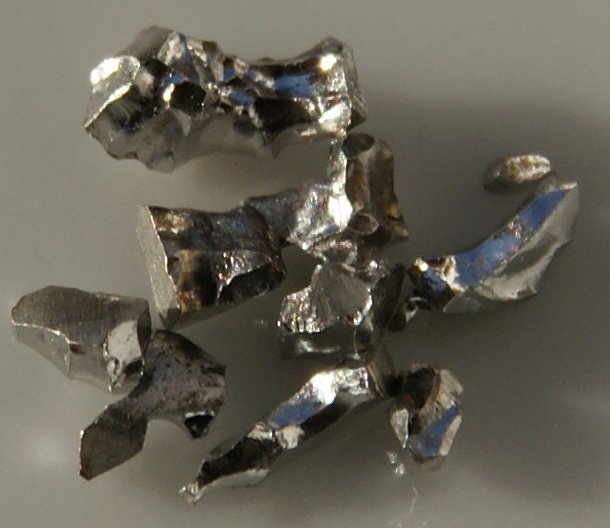
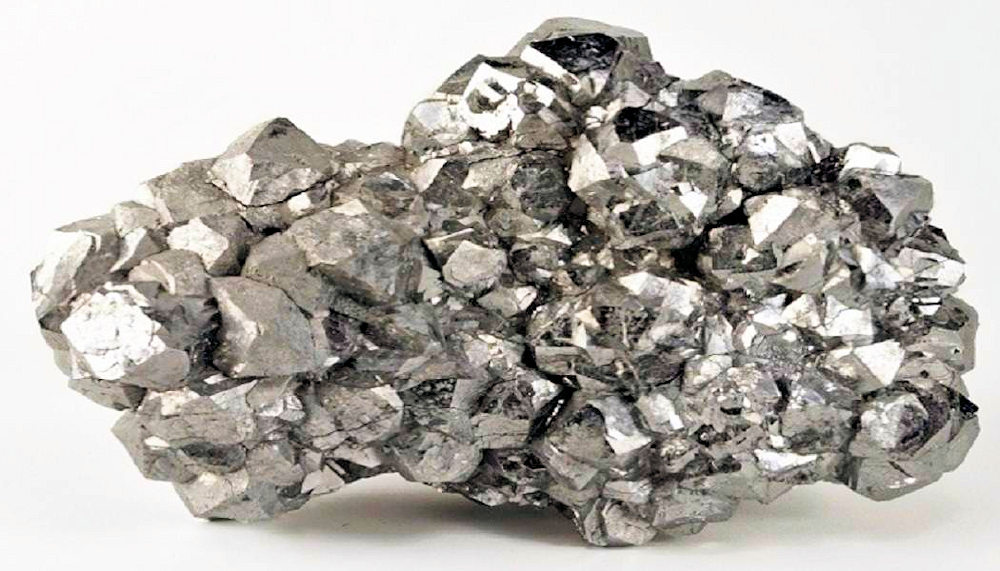
Iridium is a platinum-group metal, the most corrosion-resistant metal known, used in spark plugs, electronics, crucibles and catalysts. It is rare enough that the entire world produces only around seven to nine tonnes per year — almost all of it as a by-product of platinum mining in South Africa's Bushveld Complex, with smaller amounts from Russia and Zimbabwe. When supply tightened in 2021 the price spiked to roughly US$6,000 an ounce, which is exactly why the “trillions buried in Haiti” story sounds plausible to people hearing it for the first time.
But run the numbers. Nobody on Earth mines iridium directly — not even South Africa, sitting on the richest platinum-group deposits on the planet. It is only ever recovered as a trace by-product of mining something else. A centimetres-thick clay layer holding parts-per-billion traces cannot be mined for iridium at any price. There is no “mountain,” there is no second-largest reserve, and there is no twenty trillion dollars.
Don't take our word for it — take Haiti's
Geologists who studied the Beloc Formation, including the study by Stinnesbeck and colleagues (“Beloc, Haiti, revisited”, Terra Nova, 1999), found iridium present only in the slightly enriched quantities expected from a major asteroid impact — a scientific curiosity, not a resource.
Haiti's own Bureau of Mines and Energy (BME) published a special report on iridium specifically to set the record straight.
In its Géominergie bulletin on iridium (bme.gouv.ht), the conclusion states plainly that commercial exploitation of iridium in Haiti is fantasy, given the extremely low concentrations in the Beloc Formation. The Haitian state's own geologists have debunked this claim in writing.
How the myth spreads
The claim circulates through a small loop of sources that cite each other rather than any geological survey:
- The Rock Newman Show — the interview segment that pushed the claim to a mass audience.
- Haiti Liberté — “Haiti has the world's second largest iridium deposits,” published without geological evidence.
- Professor Vixamar — whose repeated assertions are the root cited by both of the above.
Follow the citations and they all lead back to each other — a closed loop with no assay, no survey, and no mine. Since Haiti's collapse into crisis — the gang takeover of most of Port-au-Prince, the collapse of the government, and the arrival of the Kenya-led Multinational Security Support mission in 2024 — the myth has found a second life as an explanation for foreign intervention: “they're there for the iridium.” They are not. There is no iridium to be there for.

The real story is worse — and it's documented
Here is why this misinformation offends us as socialists: it takes the true story of Haiti's plunder — which is documented, shameless, and ongoing — and replaces it with an easily debunked fantasy that discredits everyone who repeats it. You do not need to invent a mountain of iridium. France extorted an independence ransom of 150 million francs from Haiti in 1825, a debt that strangled the country for over a century. In 1914, US Marines removed Haiti's gold reserve to a New York bank vault, and the United States occupied the country from 1915 to 1934. And Haiti does hold real mineral wealth today: gold, copper and silver prospects in the Massif du Nord — the same geological belt as the Dominican Republic's giant Pueblo Viejo gold mine — which foreign companies have been circling for years, with exploration permits handed out with little transparency while the state is too weak to bargain.
THAT is the resource story Haitians should be vigilant about: real gold under a real mountain range, negotiated in weakness. Every minute spent arguing about imaginary iridium is a minute not spent asking who holds the exploration permits in the Massif du Nord and on what terms.
Conclusion
Haiti's “mountains of iridium” do not exist. The Beloc Formation holds a world-famous trace of the asteroid that killed the dinosaurs — parts per billion in a layer centimetres thick — and Haiti's own Bureau of Mines has said in writing that mining it is fantasy. The myth survives because it flatters a truth everyone senses: that Haiti has been robbed. It has — by ransom, occupation, odious debt and lopsided concessions, not by secret iridium convoys. Defend Haiti's sovereignty over its real resources, cite its real history, and let the fake mountain die. Solidarity built on facts cannot be debunked.