



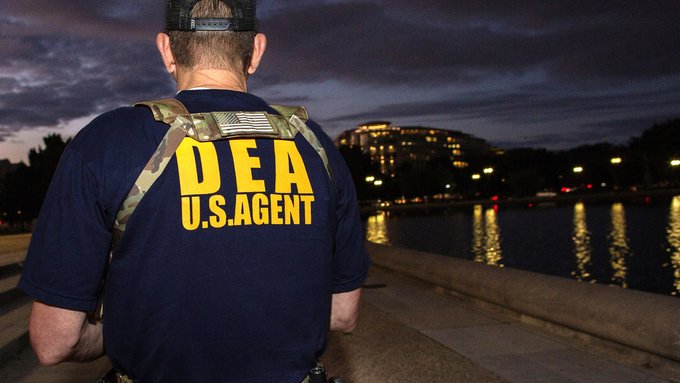
Venezuela dismantles DEA false flag operation
Authorities in the South American country intercepted a small boat carrying 3,680 kg of cocaine.
Venezuelan Interior Minister Diosdado Cabello announced Wednesday the dismantling of a "false flag" operation allegedly led by the Drug Enforcement Administration (DEA) to link the South American country to drug trafficking.
In a press conference, Cabello reported that Venezuelan authorities carried out an operation in which they seized 3,680 kg of cocaine aboard a boat from the department of La Guajira, Colombia, with four crew members arrested.
Cabello stated that during the operation, members of the Bolivarian National Armed Forces (FANB), who had prior information from intelligence agencies, waited for 20 hours for a small boat to pass from La Guajira, which arrived on the Venezuelan coast of Falcón state, with access to the Caribbean.
He explained that the intention was to make people believe that the "narco-boat," which would likely be captured by U.S. authorities in Caribbean waters, had left Venezuela.
The Vice President of Policy, Citizen Security, and Peace explained that they issued all necessary warnings to the crew members, complying with drug interdiction protocols, but that they finally, "when they saw they were surrounded, surrendered."
"Who owns that drug?"
Cabello asserted that this anti-narcotics operation " has its own history ." "Who is the owner of those drugs?" he asked, adding: "The drug operator is a man named Levi Enrique López Batis."
" I'm going to say this with full knowledge of the facts and make it very clear: Levi Enrique López Batis is a DEA agent, a drug trafficker, and this was going to be part of a false flag operation against Venezuela."
The Minister of the Interior added that four people were arrested in this operation and that it was " strange " that the "four citizens had their Venezuelan ID cards ready to be handed over."
"That drug boat was a DEA false flag operation to accuse Venezuela. Four people with Venezuelan IDs were going to be arrested. That's what they're saying," Cabello said.
In his opinion, this maneuver, thwarted by Venezuelan authorities, seeks to "accuse Venezuela of any barbarity constantly carried out by the world's largest drug cartel, the DEA."
"This is the evidence"
Among the seized materials were 100 bags of cocaine hydrochloride, a "Go Fast" boat with four outboard motors, a satellite phone, two smartphones, two radio transmitters, a GPS, and 2,400 liters of fuel in 28 drums.
"This is the evidence," Cabello said. "This is how an operation is conducted when you want to prove a fact. We don't bomb a boat," he said, referring to the alleged destruction of three boats, attributed without evidence to Venezuela, by U.S. military personnel as part of their deployment ordered by the White House "to combat drug trafficking" in the Caribbean.
In his appearance before the media, the sector's vice president showed a video showing the pursuit of the boat, the actions of the Venezuelan military, the capture, and the seized drugs.
"And there are no lies of any kind. Procedure, evidence, those responsible captured, at the orders of the authorities," he stated.
"It's not a good idea to smuggle drugs through Venezuela."
Cabello confirmed the figures from the United Nations Office on Drugs and Crime (UNODC) report, which states that 87% of the drugs produced in Colombia leave through the Pacific and only 5% pass through the Caribbean.
At the press conference, he showed a map showing the route taken by the drug traffickers' boat, which traveled from Puerto López in Colombia's La Guajira, passed through the Paraguaná Peninsula in the Venezuelan state of Falcón, and was intercepted near the Port of Cumarebo on the state's coast.
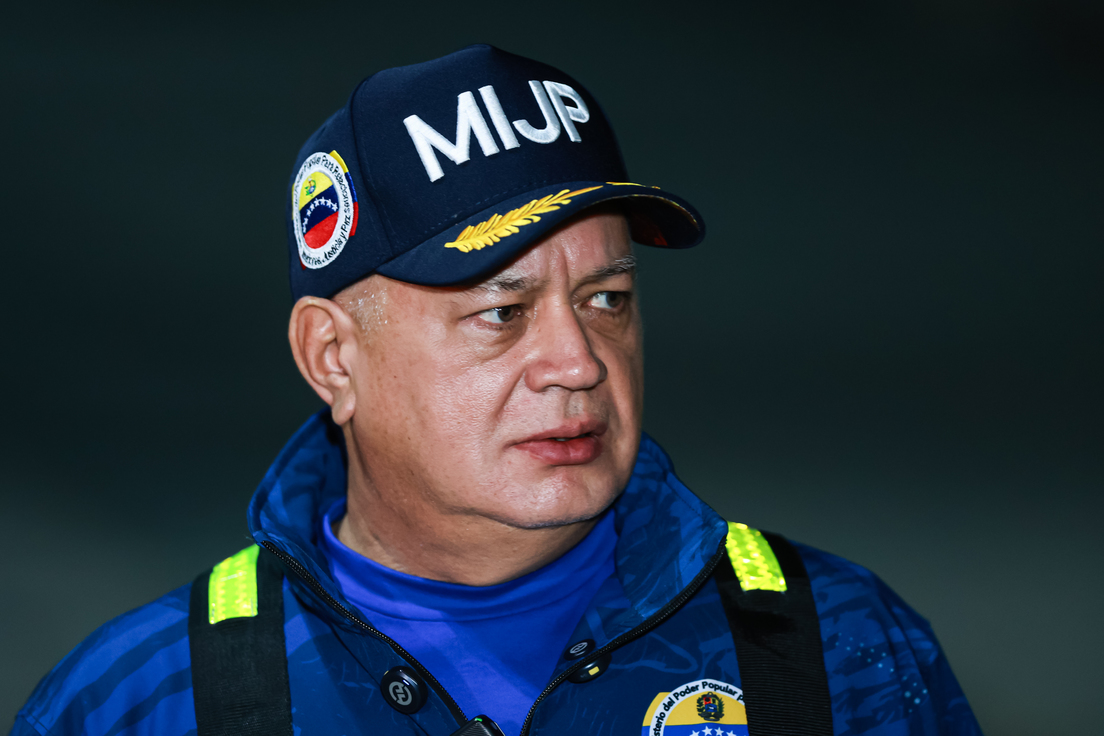
"If the reason was to fight drug trafficking, they would be in the Pacific," he said, referring to the U.S. military deployment in the Caribbean.
"It's not profitable for them to get their drugs out through here; it's probably profitable for them to deal with those who want to hand over Venezuelan territory so that drugs can be freely transported. They won't get through here; we're fighting them," he said, referring to the 60 tons of drugs seized in the South American country so far this year.
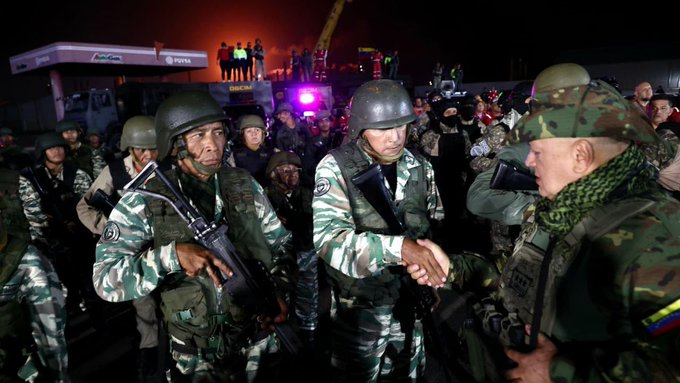
There is no entry of fentanyl into Venezuela.
"A clean, clear, transparent operation with results," he reiterated, questioning Trump's reports about fentanyl trafficking on the latest destroyed vessel, attributed to Venezuela, where three people were allegedly killed.
In front of state security authorities, Cabello asked, "Has fentanyl ever been captured here?", to which they all responded negatively.
The Interior Minister questioned the fact that, while the U.S. military operation in the Caribbean costs more than $10 million a day, according to experts, a packet containing two doses of the drug naloxone, which prevents death from opioids, costs about $45. "How many of those could be bought with the extravagant deployment of troops in the Caribbean?" he asked.