Kamla Persad-Bissessar’s Dangerous Gamble: Appointing Corruption-Prone Trio to Trinidad and Tobago’s Ministry of Housing
In a move that has left Trinidad and Tobago reeling, Prime Minister Kamla Persad-Bissessar has appointed three men with deeply troubling records—Anil Roberts, Phillip Edward Alexander, and David Lee—to lead the Ministry of Housing. This decision, far from a stroke of genius, reeks of political recklessness and raises serious questions about Persad-Bissessar’s commitment to integrity in governance. The trio’s checkered pasts, marred by allegations of corruption and financial mismanagement, make their placement in such a sensitive ministry a potential disaster for the nation. Alternatively, some might argue that concentrating these controversial figures under one roof, where three signatures are required to approve contracts, could be a cunning way to limit their individual power—but the risks far outweigh any theoretical benefits.
Anil Roberts: The LifeSport Scandal’s Poster Child
Anil Roberts, a former Sports Minister and current UNC Senator, is no stranger to controversy. His name is indelibly linked to the LifeSport scandal, a $400 million debacle that epitomized corruption and mismanagement under the People’s Partnership administration. Launched in 2012 to reform at-risk youth, LifeSport was riddled with procurement breaches, fraud by suppliers, theft of equipment, and even links to criminal activities, including gang-related murders. An audit by the Ministry of Finance exposed these issues, leading to the program’s termination in 2014 and Roberts’ resignation as Sports Minister.
Roberts has consistently denied personal wrongdoing, claiming his “hands were never dirty” and challenging investigators to find evidence against him. Yet, the scale of the scandal—coupled with his refusal to fully cooperate with parliamentary inquiries, citing health issues—casts a long shadow over his credibility. His appointment to the Ministry of Housing, where oversight of multimillion-dollar contracts is paramount, is a baffling choice for a leader supposedly committed to transparency.
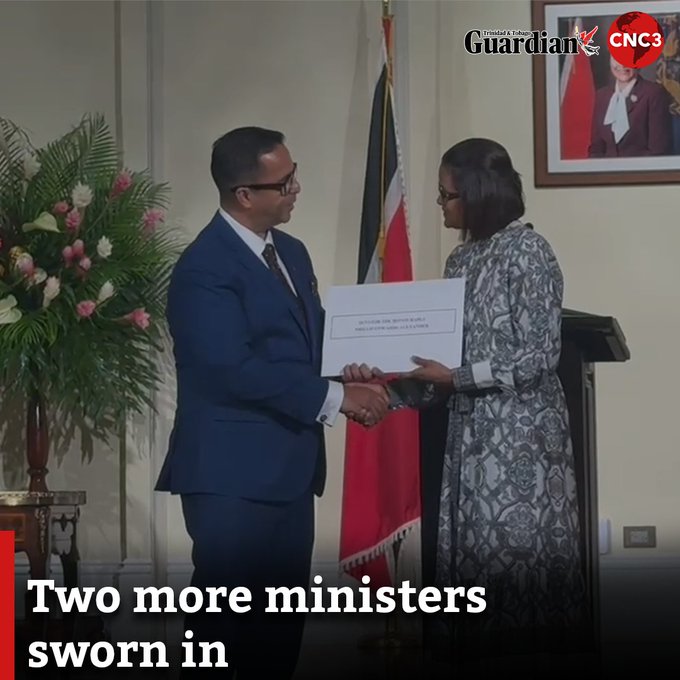
Sacha founder Satyakama “Kama” Maharaj and Phillip Edward Alexander greet each other at President’s House ahead of the swearing-in ceremony for two government officials carded to begin at 3pm. This comes as the portfolio for Minister of Trade, Investment and Tourism remains… pic.twitter.com/DmV5BTkDw1
— CNC3TV (@CNC3TV) May 7, 2025
Phillip Edward Alexander: A Debt-Ridden Risk
Phillip Edward Alexander, leader of the Progressive Empowerment Party (PEP), brings his own baggage to the table. Known for his vocal critiques of government corruption, Alexander’s personal financial troubles undermine his moral authority. Reports indicate he carries significant debts, a red flag in any system serious about preventing corruption. In the United States, individuals with large debts are often barred from sensitive government positions due to their vulnerability to bribery and influence peddling. The U.S. Integrity Commission and similar bodies rigorously vet candidates, recognizing that financial distress can tempt officials to abuse their power for personal gain.
Alexander’s debts, while not directly tied to a specific scandal, raise concerns about his suitability for a role overseeing housing contracts worth billions. His vocal anti-corruption stance feels hollow when juxtaposed with his financial instability, which could make him susceptible to the very practices he publicly decries. Placing him in a ministry where lucrative deals are routine is a gamble that Trinidad and Tobago cannot afford.
David Lee: Dodging Fraud Allegations
David Lee, appointed as the head of the Ministry of Housing, has his own history of legal entanglements. In 2022, Lee, then a UNC MP for Pointe-a-Pierre, faced charges of misbehavior in public office and conspiring to defraud the state of $1.4 million in motor vehicle taxes. The allegations centered on Lee’s alleged misuse of parliamentary tax exemptions to purchase a $2.3 million Mercedes-Benz, purportedly for a UNC financier, Leong Poi. Though the charges were discharged in 2025 due to insufficient evidence, the case raised serious questions about Lee’s judgment and integrity. His claim of being a victim of a “political witch hunt” did little to dispel public skepticism, especially given his annual declarations to the Integrity Commission, which failed to fully clarify the vehicle’s ownership.
Lee’s appointment as Housing Minister, where he oversees a portfolio ripe for abuse, is a slap in the face to citizens demanding accountability. His past suggests a willingness to exploit loopholes, making him an ill-fit for a role requiring unimpeachable ethics.
The U.S. Integrity Commission: A Model Trinidad Lacks
The United States employs stringent vetting processes through bodies like the Office of Government Ethics and the FBI’s background checks to ensure that appointees to sensitive positions are free from conflicts of interest. Large debts, criminal allegations, or ties to corrupt activities can disqualify candidates, as these factors increase the risk of bribery, extortion, or abuse of power. For example, the U.S. Department of State’s Section 353 Corrupt and Undemocratic Actors Report targets foreign officials involved in significant corruption, barring them from entry and signaling a zero-tolerance stance.
Trinidad and Tobago’s Integrity Commission, by contrast, appears toothless. Established to promote transparency and accountability, it has failed to prevent individuals with questionable records from ascending to high office. The appointment of Roberts, Alexander, and Lee to the Ministry of Housing—where they will oversee contracts for public housing, urban development, and infrastructure—exposes the Commission’s weaknesses. Without rigorous vetting akin to U.S. standards, the nation risks entrusting its resources to individuals prone to self-interest.

Three Signatures: Genius or Folly?
Some might argue that Persad-Bissessar’s decision to place these three men in one ministry is a calculated move. The requirement for three signatures to approve contracting projects could theoretically act as a check on individual malfeasance, forcing Roberts, Alexander, and Lee to scrutinize each other’s actions. In a ministry prone to corruption—where government contracts are often inflated or awarded to cronies—this setup might limit the damage any one figure can inflict alone.

However, this optimistic view ignores reality. Three individuals with tainted records are unlikely to hold each other accountable; instead, they could collude to exploit the system, sharing the spoils of corrupt deals. The U.S. experience shows that robust institutional safeguards—background checks, financial disclosures, and independent oversight—are far more effective than relying on mutual suspicion among flawed actors. Trinidad and Tobago’s housing sector, already plagued by delays and cost overruns, cannot afford this experiment.
.jpeg)
A Betrayal of Public Trust
Kamla Persad-Bissessar’s appointment of Anil Roberts, Phillip Edward Alexander, and David Lee to the Ministry of Housing is a betrayal of public trust. Their histories—Roberts’ LifeSport fiasco, Alexander’s crippling debts, and Lee’s fraud allegations—make them unfit for roles where integrity is non-negotiable. The Integrity Commission’s failure to block such appointments underscores the need for reform, ideally modeled on U.S. standards that prioritize financial stability and clean records.
Far from a stroke of genius, this trio’s placement in a corruption-prone ministry is a recipe for disaster. The three-signature rule offers little comfort when the signatories themselves are compromised. Trinidad and Tobago deserves leaders who inspire confidence, not dread. Persad-Bissessar must reconsider this reckless decision before the nation pays the price for her misjudgment.