



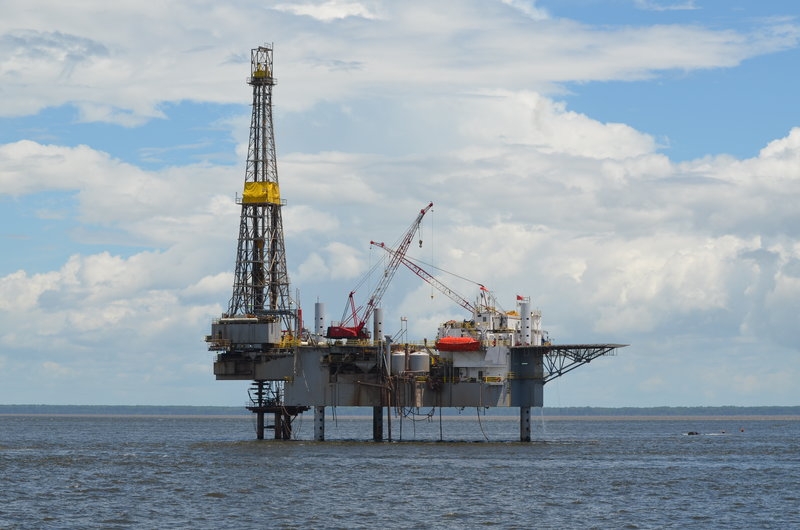
I had some questions about Trinidad's Oil...So I did some digging...
Trinidad and Tobago has proven reserves equivalent to 35.0 times its annual consumption. This means that, without imports, there would be about 35 years of oil left (at current consumption levels and excluding unproven reserves)
British prospectors found rich oil reserves and started drilling before 1900. This initial spark propelled Trinidad and Tobago into rapid industrialization during the 20th century, as they developed the infrastructure needed to extract, refine, and transport fossil fuels worldwide. The export of these fuels (first crude oil and more recently liquified natural gas) has generated substantial wealth for the nation, and the abundance of fuels also enabled domestic manufacturing of petrochemical products such as ammonia and methanol for export. The value of these petroleum-based exports reached $10 billion as of 2018, and decades of this revenue has made Trinidad and Tobago one of the wealthiest countries in the Caribbean. Really!
In 2018, Petrotrin was broken up into four subsidiary companies after the government ended its operations because it was $12 billion in debt. This led to the closure of the country’s only crude oil refinery located at Pointe-à-Pierre, reducing the energy independence the country had enjoyed since production began. For the first time in a century Trinidad and Tobabo needed to import oil for gasoline, diesel, and jet fuel.
Following the closure Petrotrin was broken up into different entities in December 2018: Heritage Petroleum Company, which is responsible for the exploration, development, production and marketing of crude oil, and Paria Fuel Trading Company, for the trading and marketing of imported fuel products. Petrotrin itself was rendered a subsidiary of Trinidad Petroleum Holding, which is responsible for all legacy items that have not been transferred to one of the new operating entities, including ongoing operation and maintenance works, workers’ pension payments, and its properties and lands. Meanwhile, ownership of all Pointe-à-Pierre refinery assets was handed to the newly established Guaracara Refining Company, a holding company tasked with the management and sale of the refinery.
According to government figures, the company accumulated losses of around TT$8bn ($1.2bn) between 2013 and 2018, along with debts of TT$12bn ($1.8bn). Furthermore, the company owed the government TT$3bn ($443m) in unpaid taxes and royalties and would require some TT$25bn ($3.7bn) to remain solvent, though would likely continue to operate at a loss. The firm had historically operated the country’s only refinery, located at Pointe-à-Pierre, north of San Fernando.
The new firm reported that production averaged 32,897 barrels per day during the first six months of 2019, representing 66% of the country’s total average crude output. “The Heritage Production Company has turned a profit in since mid-2018,” Douglas Boyce, a consultant at T&T-based upstream services provider Intecsea, told OBG. “So the cloud over the industry has a silver lining.”
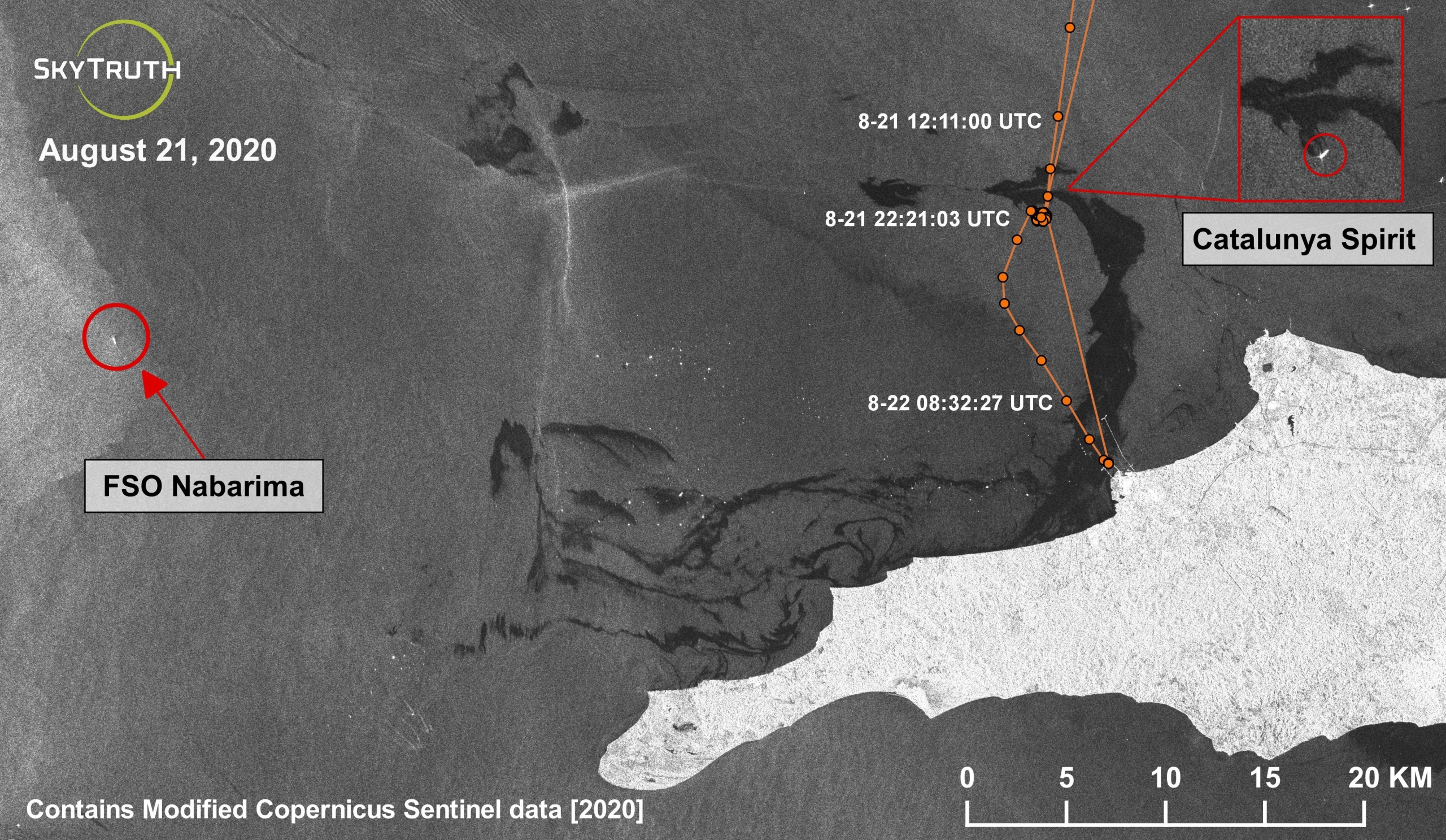
While private companies and the Trinidad government are currently struggling to reach a new partnership to reopen the Pointe-à-Pierre refinery, Petrotrin’s degrading offshore infrastructure doesn’t seem to have an easy fix either. The offshore assets are now held under the name of Heritage Petroleum Company, which has plans to increase production in the Soldado area. But while they are inheriting the profits of Petrotrins’ wells, they are also inheriting the problems of their leaking infrastructure.
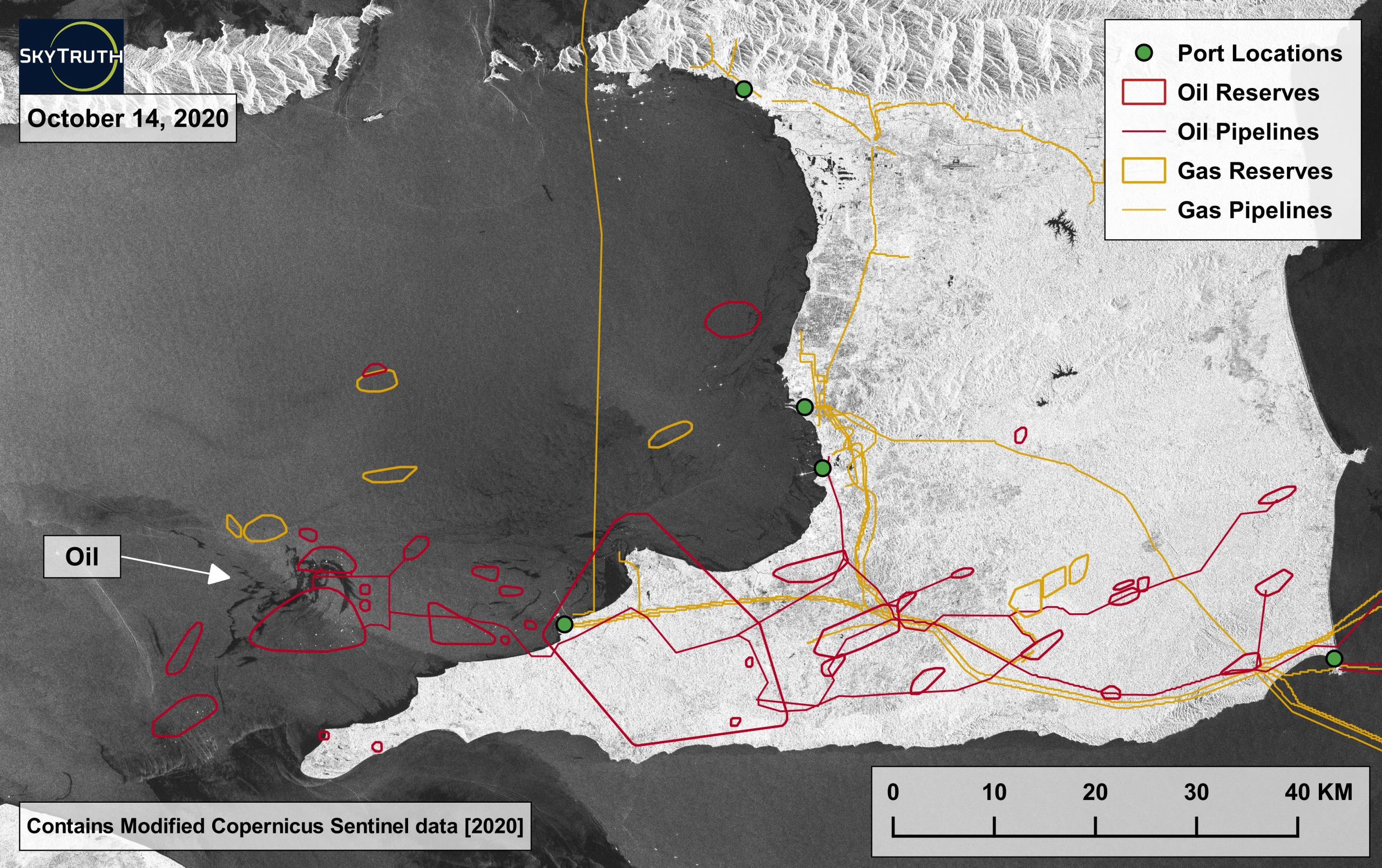
Trinidad and Tobago has invested deeply in infrastructure to continue extracting and transporting oil and gas. The map below illustrates the miles of pipelines connecting platforms on offshore oil and natural gas fields to refineries and ports across the island, as well as an oil slick around an area with several platforms roughly 15 kilometers (about 9.3 miles) from the coast. More oil and gas fields exist off Trinidad’s east coast and are not pictured below.
Three oil fields: Samaan, Teak, and Poui. These reserves were discovered and developed in the 1970s. As of 2017, the trio produced 14,000 barrels of crude oil per day. These assets are owned by three companies: Anglo-French oil company Perenco owns a 70% share, and state-owned companies National Gas Company (NGC) and Petrotrin both own 15% shares. While this collective ownership makes transferring permits and sharing profits easy, it complicates accountability and litigation.
So trinidad is producing oil from its exploration activities. Approx barrels a day. Where is that getting refined?
25,000 barrels of oil per day to supply the economy
Leave a Reply